
Table of Contents
ToggleFort Donelson National Battlefield sits at the intersection of real history and virtual warfare. For gamers, it’s more than just a tourist destination, it’s a location that’s made its way into multiple gaming titles, military simulations, and historical strategy games over the past two decades. Whether you’re a Battlefield series veteran, a history buff who appreciates period-accurate detail, or someone curious about how real-world landmarks translate into interactive entertainment, understanding Fort Donelson opens up a fascinating lens on how games handle authenticity. The site itself, located on the Cumberland River in Dover, Tennessee, was the scene of a pivotal Civil War victory in 1862. But its cultural significance extends far beyond the history books, it’s become a blueprint for how developers approach historical combat scenarios, environmental design, and educational gaming content. This guide breaks down what Fort Donelson actually is, why it matters in gaming culture, how it’s portrayed in popular titles, and what you should know whether you’re exploring it virtually or planning a real-world pilgrimage.
Key Takeaways
- Fort Donelson National Battlefield, located in Dover, Tennessee, preserves 536 acres of a pivotal 1862 Civil War fort that has become a reference point for game developers designing historically-inspired maps and defensive terrain.
- The battle of Fort Donelson demonstrates that defensible terrain and elevated positions don’t guarantee victory, a principle that directly translates to multiplayer and strategy game tactics today.
- Game developers face a tension between historical accuracy and gameplay balance, solving it by capturing the essence of Fort Donelson’s riverside fort and elevated positions while abstracting certain elements for competitive fairness.
- Virtual reality and gaming engines now enable educational institutions to create interactive 3D reconstructions of Fort Donelson, making abstract historical information spatial and navigable for visitors.
- Gamers can enhance their experience by visiting the actual Fort Donelson National Battlefield site (536 acres, free admission, year-round access), which reinforces in-game tactical knowledge and connects entertainment to real historical learning.
- Gaming experiences that feature Fort Donelson increase engagement with historical content, creating a virtuous cycle where games drive interest in Civil War history and historical research deepens gaming appreciation.
What Is Fort Donelson National Battlefield?
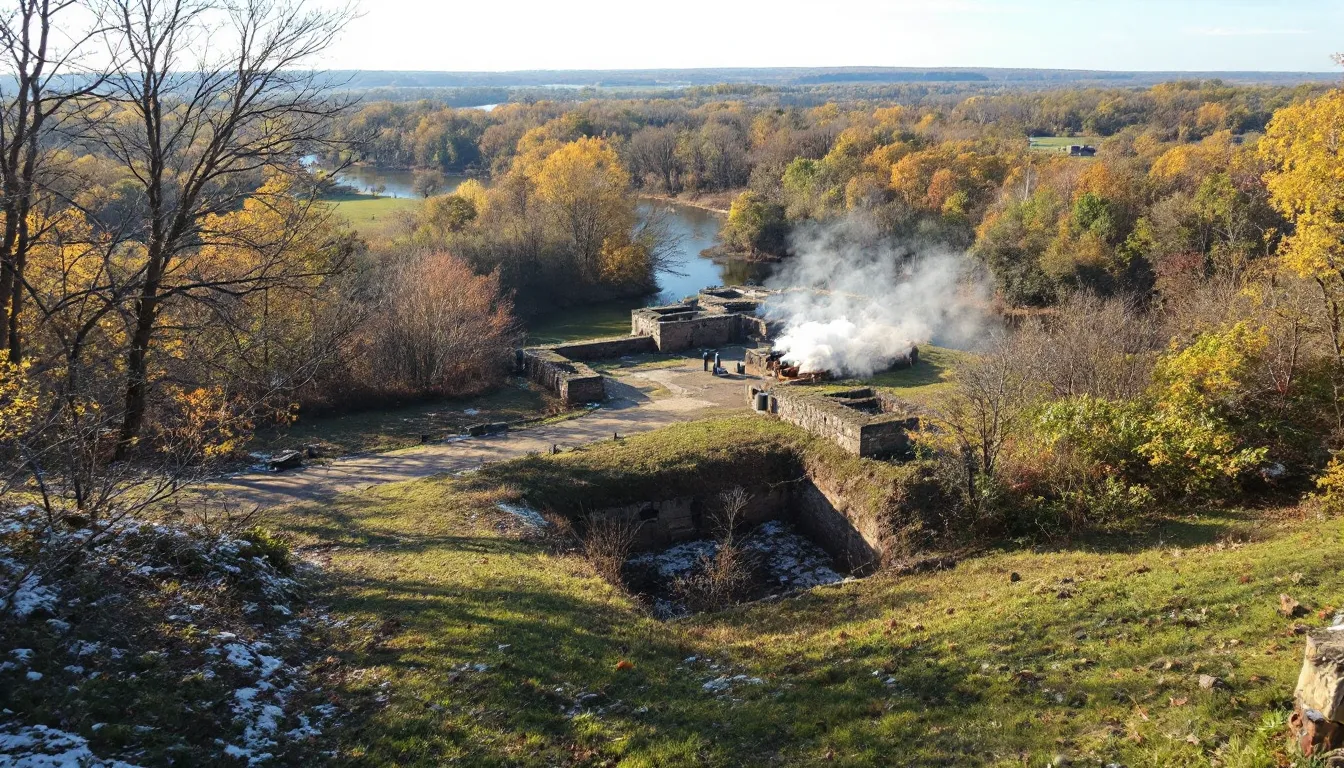
Fort Donelson National Battlefield is a preserved American Civil War fortification located in Dover, Tennessee, overlooking the Cumberland River. Established as a National Battlefield in 1928, it preserves approximately 536 acres of the original site. The fort itself was a critical Confederate stronghold during the early stages of the Civil War, designed to control river traffic and supply lines through Tennessee.
The layout includes remnants of earthen fortifications, artillery emplacements, and the strategically positioned gun batteries that made the site formidable. Walking through the grounds today, you’ll encounter restored trenches, cannons in their original positions, and informational markers that detail unit positions and tactical decisions. The visitor center provides context through exhibits, artifacts, and a museum that grounds the abstract numbers of historical records in tangible objects, letters, weapons, uniforms.
For gamers, the significance lies in the physical layout and defensive positioning. Fort Donelson’s design, a fort on elevated terrain overlooking a river approach, creates inherent defensive advantages. The concentrated battery positions, the network of rifle pits, and the terrain itself shaped how Confederate forces attempted to hold the position. This kind of environmental storytelling is precisely what draws game developers to historical sites: the landscape literally encodes strategic decision-making.
Historical Significance And Real-World Context
The Battle of Fort Donelson took place from February 12–16, 1862, and it stands as one of the first major Union victories of the Civil War. General Ulysses S. Grant commanded Union forces estimated at around 27,000 soldiers, while Confederate General John B. Floyd commanded roughly 17,000 defenders. The outcome wasn’t predetermined, early Confederate counterattacks on February 15 nearly broke the Union siege.
What made Fort Donelson historically pivotal was its strategic location and its psychological impact. The Cumberland and Tennessee rivers were the primary routes for military movement and supply in the western theater. Control of Fort Donelson meant control of river traffic, and the Union victory there opened the pathway for deeper Federal penetration into Confederate territory. The fort’s fall also delivered a psychological blow to Confederate morale and made Grant a national figure, “Unconditional Surrender Grant” became his nickname after he demanded Fort Donelson’s unconditional surrender.
The human cost was significant: combined casualties exceeded 2,500 soldiers, with the Confederacy losing not just the fort but also approximately 12,000 troops as prisoners of war. For modern audiences, these numbers are abstract. But for gamers interested in tactical depth, the battle demonstrates something critical: defensive positions don’t guarantee victories. Poor timing, miscommunication, failed counterattacks, and superior enemy numbers can overcome even good terrain. This complexity is what makes Fort Donelson compelling as a historical case study and why developers are drawn to it as source material.
The real-world battle lasted four days. Strategic decisions cascaded: should the fort attempt a breakout or hold position? When should artillery be deployed? Which defensive lines were essential, which were vulnerable? These tactical questions haven’t changed in 160+ years, they’re the same ones you’re wrestling with when coordinating squad movement in a tactical shooter or managing unit positioning in a strategy game.
Fort Donelson In Video Games And Gaming Culture
How Fort Donelson Appears In Popular Gaming Titles
Fort Donelson has appeared in multiple gaming contexts, most notably in the Battlefield series, specifically in Battlefield 1 (released October 2016). The map is titled “Fort de Vaux,” a fictional French fortification, but the defensive structure and layout draw heavily from historical American Civil War-era forts, including architectural references to Fort Donelson. The confined spaces, elevated battery positions, and river element all mirror Donelson’s actual layout.
Beyond the Battlefield franchise, Fort Donelson has featured in historical strategy games and educational titles. Games like Sid Meier’s Civilization VI reference the location indirectly through Civil War scenarios, while dedicated Civil War games like American Civil War: The Blue and the Gray (older strategic title) and more recent indie releases have attempted to recreate specific battles at Donelson with varying degrees of accuracy.
The Smithsonian, recognizing the educational potential of gaming, has partnered with game developers to create virtual experiences of historical sites. Fort Donelson is among the locations that museums and educational institutions have explored for VR and 3D game-engine recreations. These aren’t commercial titles necessarily, they’re preservation and education tools that let visitors experience the fort’s scale and positioning in ways a static museum can’t convey.
YouTube content creators, particularly those focused on historical military gaming and let’s-play content, have created hundreds of videos exploring Fort Donelson in-game, often with historical commentary overlaid. Channels dedicated to Civil War history frequently reference gaming recreations as a way to help viewers understand defensive positioning and tactical concepts.
Authenticity And Historical Accuracy In Game Representations
This is where it gets interesting. Fort Donelson’s real-world layout, the river positioning, the elevation changes, the defensive earthworks, is extremely defensible terrain. Game developers face a fundamental tension: actual historical accuracy can sometimes make for unbalanced multiplayer experiences. A map where one team has a geometrically superior defensive position might be historically accurate but fundamentally unfair in competitive play.
Most commercial games solve this by liberalizing the historical reference. They’ll capture the essence, riverside fort, elevated positions, confined spaces, while abstracting or mirroring certain elements to ensure both teams have viable strategies. Multiplayer maps based on Fort Donelson aren’t 1:1 recreations: they’re inspired-by interpretations.
Educational and single-player games, by contrast, tend toward stricter historical accuracy. A historical strategy game simulating the 1862 battle will attempt to reflect actual troop positions, supply lines, and terrain, even if that makes one side objectively harder. The goal isn’t competitive fairness: it’s learning.
This distinction matters for gamers evaluating what they’re playing. If you’re in a multiplayer match on a “historically-inspired” Fort Donelson map, don’t expect perfect geographical accuracy. If you’re in a dedicated historical simulation, expect terrain and positioning to reflect actual advantages and disadvantages. Recognizing the difference prevents frustration and helps you appreciate what developers are actually trying to accomplish.
Exploring Fort Donelson Through Gaming Experiences
Virtual Tours And Educational Gaming Content
Virtual reality has opened new possibilities for experiencing historical sites. The National Park Service has partnered with technology firms to create 360-degree VR experiences of Fort Donelson’s key locations. These aren’t games in the traditional sense, there’s no winning or losing, no combat mechanics. Instead, they’re interactive educational experiences that let you “stand” in artillery positions, walk the rifle pits, and experience the scale and layout firsthand.
Several museum institutions near Fort Donelson (including the Dover Historical Society) have incorporated gaming engines to create interactive exhibits. Visitors can use tablets or installed kiosks to see how the battle unfolded, with 3D reconstructions showing unit movements, supply lines, and tactical maneuvers. These tools have proven effective for education because they make abstract historical information spatial and navigable. You’re not just reading that General John B. Floyd’s breakout attempt occurred on the morning of February 15, you’re seeing where on the fort it happened and understanding why it mattered.
As gaming technology improves, these educational experiences become more sophisticated. Unreal Engine and Unity, the same engines powering commercial games, are now accessible to educational institutions. This means expect increasing quantities of high-fidelity, interactive historical content in the coming years. Fort Donelson is positioned to benefit from this trend, given its clear strategic layout and the well-documented nature of the battle.
Gaming Tips For Battlefield-Themed Scenarios
If you’re playing a game inspired by Fort Donelson’s layout, whether it’s a Battlefield title, a strategy game, or a dedicated Civil War simulation, several real-world principles apply:
Terrain Control: Elevated positions are crucial. Historical Fort Donelson had higher ground: maps based on it typically grant advantages to defenders holding high ground. Prioritize capturing and defending elevated locations, even if it requires longer rotations to reach them.
River Approaches: Bridges and water crossings are bottleneck zones. If your game includes a river element (like Fort Donelson maps often do), control of crossing points determines team movement. Defenders can lock down chokepoints: attackers must coordinate flanks to bypass them.
Battery/Artillery Positions: These points are typically map power positions. Holding static gun emplacements or designated artillery zones grants area control. Use them, but don’t get overcommitted, defenders holding these spots become predictable targets for coordinated teams.
Defensive Depth: Real forts (and historically-inspired maps) have multiple defensive lines. Don’t collapse to a single line of defense. Maintain depth so that if one position falls, you have fallback options. This mirrors real military doctrine that Fort Donelson’s commanders attempted to execute.
Supply Lines/Rotation Routes: Understanding how to move between key points without exposing yourself to crossfire matters. Historical maps often have logical but dangerous routes: learn the safer paths and the high-risk shortcuts. This knowledge separates casual players from experienced ones.
These principles work because they’re derived from actual military doctrine, which games appropriately translate into their own rulesets and mechanics.
Planning A Real-World Visit: What Gamers Should Know
Visiting The Actual Fort Donelson Site
If you’re planning to visit the physical Fort Donelson National Battlefield, here’s what you should expect and prepare for:
Location & Access: Fort Donelson is located at 120 Fort Donelson Road, Dover, Tennessee 37058. It’s roughly 50 miles west of Nashville, accessible via I-24 and Highway 79. The site is open year-round, and admission is free. The visitor center is open daily (hours vary by season: check the National Park Service website for current information).
What to Expect: The site covers 536 acres with walking trails ranging from 0.5 miles to several miles in length. Terrain is hilly and sometimes muddy, especially after rain. Wear appropriate footwear, sneakers are okay for light trails, but hiking boots are ideal if you’re doing longer walks. Bring water and sun protection: there’s limited shade in open fortification areas.
Museum & Exhibits: The visitor center includes a museum with artifacts, maps, and detailed exhibits about the battle. Ranger-led talks and programs occur seasonally. If you’re interested in specific aspects (like artillery, unit movements, or specific regiments), arrive early and ask rangers for recommendations on which exhibits or trail sections to prioritize.
Photography & Documentation: The site is photographer-friendly. If you’re documenting locations for gaming reference or content creation, early morning or late afternoon provides better lighting. Bring a good camera or smartphone: the landscape details (earthwork patterns, tree lines, river views) photograph well and can serve as reference material if you’re creating content or mods.
Crowds & Timing: Fort Donelson attracts history enthusiasts, tourists, and school groups. Weekday visits are typically less crowded than weekends. Civil War anniversary dates (especially mid-February around the February 12–16 battle dates) see increased visitation.
Connecting Gaming Knowledge To Historical Learning
Visiting the actual site after gaming experiences based on it creates interesting cognitive bridges. You’ll recognize terrain patterns, understand why certain positions were defensible, and appreciate the scale in ways a monitor can’t convey. A Fort Donelson-inspired game map might represent 100 acres as a few square kilometers: standing on the actual terrain gives you a reality check on what soldiers traversed and how exposed they were.
Gamers with strategy game experience often find themselves thinking tactically when visiting historical sites. You’ll catch yourself analyzing fields of fire from artillery positions, identifying chokepoints, considering supply line logistics. This isn’t irreverent, it’s exactly what military planners did in 1862. Games and history aren’t competing interpretations: they’re complementary perspectives on the same problems.
The National Park Service has recognized that gaming and gamified learning drive engagement, particularly among younger audiences. If you’re bringing gaming knowledge to a real-world visit, you’re validating what educators increasingly understand: interactive, spatial learning, whether digital or physical, connects people to history more effectively than passive consumption.
Consider documenting your visit in gaming contexts. Create guides linking in-game maps to real-world locations. Stream or video your visit with historical commentary. Connect your gaming audience to actual sites. This kind of content bridges the gap between entertainment and education, and it’s increasingly what platforms like YouTube and streaming services prioritize.
Fort Donelson’s Legacy In Modern Gaming And Entertainment
Fort Donelson’s influence on gaming extends beyond direct appearances in specific titles. The site represents a category of historical locations that developers return to repeatedly: defensible terrain with clear strategic advantages, well-documented historical events, and compelling narratives about how geography shapes military outcomes.
The broader trend is significant. As games increasingly pursue historical authenticity (or at least historical flavor), real-world sites like Fort Donelson become reference material. Developers scout actual locations, study terrain, interview historians, and analyze primary sources. Games like Battlefield 1, Call of Duty: WWII, and emerging titles in historical simulation genres rely on this kind of environmental research.
For streaming and content creation, Fort Donelson offers untapped potential. Streamers who combine gaming (playing historically-inspired titles) with real-world location content attract audiences interested in both entertainment and education. The crossover appeal of “gamer visits real battlefield” content is significant, particularly on platforms like YouTube and Twitch where history and gaming communities increasingly overlap.
Studies have shown that gaming increases interest in historical topics. Players who engage with Fort Donelson in game-engine reconstructions or multiplayer maps show increased likelihood of researching the actual battle, visiting the real site, or consuming related educational content. This virtuous cycle, games driving interest in history, history enriching gaming experiences, is shaping how cultural institutions and entertainment platforms approach historical content.
Playzonelegendshq and similar gaming-focused publications are recognizing that historical gaming content resonates with audiences tired of generic sci-fi or fantasy settings. Civil War gaming, historical strategy, and location-based immersion provide alternatives to abstract game worlds. As more developers invest in historical authenticity, expect Fort Donelson and similar sites to feature more prominently in gaming discussions.
Conclusion
Fort Donelson National Battlefield sits at a unique intersection of history, gaming, and education. For gamers, it’s more than a tourist destination, it’s a real-world location that has shaped how developers approach historical authenticity, terrain design, and strategic gameplay. Understanding Fort Donelson means understanding how games translate real military decisions into interactive experiences, and why terrain, positioning, and defensive strategy matter just as much in digital spaces as they did in 1862.
Whether you’re exploring Fort Donelson through a game engine, planning a real-world visit, or creating content that bridges both worlds, recognize the significance of what you’re engaging with. The location isn’t just historically important: it’s a case study in how technology, education, and entertainment can reinforce and enhance each other.
The next time you’re playing a Fort Donelson-inspired map or a strategy game featuring Civil War battles, take a moment to research the real event. Visit the National Battlefield if you’re able. Create content connecting the dots between virtual and physical spaces. This kind of engagement honors the historical figures whose decisions shaped the location while deepening your own appreciation for how games handle authenticity. Fort Donelson’s legacy in gaming is still being written, and gamers like you are part of that story.


