
Table of Contents
ToggleHistory buffs and strategy game enthusiasts often find themselves drawn to the same intellectual well, analyzing decisions, understanding terrain advantages, and exploring “what if” scenarios that shaped real-world outcomes. Richmond National Battlefield Park sits at the intersection of these passions, offering both a genuine historical pilgrimage and a surprising amount of relevance for gamers interested in strategy, tactics, and immersive storytelling. Whether you’re a casual visitor wanting to walk the grounds of the Seven Days Battles or a competitive mind fascinated by how terrain and supply lines determined Civil War outcomes, Richmond National Battlefield Park delivers the kind of concrete, data-rich experience that resonates with anyone who appreciates strategic depth. In 2026, the park remains one of the most accessible ways to understand American military history, and it’s surprisingly engaging for anyone who appreciates the mechanics behind conflict.
Key Takeaways
- Richmond National Battlefield Park is a distributed network of eleven battlefield sites across Virginia that chronicles Civil War campaigns from 1862–1865, preserving over 2,754 acres of historic ground.
- The park appeals equally to history enthusiasts and strategy game players, as walking the actual terrain of battles like Cold Harbor and the Seven Days Battles reveals real constraints—terrain advantages, supply lines, and fortified positions—that games attempt to simulate.
- Admission is free, and the Tredegar Visitor Center provides free maps, ranger-led programs, and orientation exhibits, with major sites like Cold Harbor and Gaines’ Mill featuring developed trails and wayside interpretive exhibits.
- Spring and fall offer ideal visiting conditions with comfortable temperatures and expanded ranger programming, while weekday mornings typically provide quieter exploration opportunities.
- Strategic preparation—including a basic historical overview, downloaded maps, comfortable walking shoes, and realistic site selection (1–2 locations per visit)—transforms Richmond National Battlefield Park from scenic observation into meaningful tactical and historical analysis.
What Is Richmond National Battlefield Park?
Richmond National Battlefield Park is a National Park Service unit comprising multiple historic Civil War battle sites scattered across the Richmond, Virginia area. Unlike a traditional single-location park, it’s a distributed network of eleven distinct battlefield locations connected by the Richmond Civil War Trails, a driving and walking route system that guides visitors through the most significant engagements of the War Between the States.
Established in 1936 and expanded multiple times since, the park preserves roughly 2,754 acres across these sites, each offering period-accurate interpretations of Union and Confederate positions, troop movements, and casualty figures. The park includes the Visitor Center at Tredegar, which serves as the primary hub for orientation, exhibits, and ranger programs.
What makes Richmond National Battlefield Park distinct is its emphasis on the campaigns rather than individual battles. The park tells a continuous narrative of military operations, failed assaults, entrenched positions, and the grinding attrition that characterized the Eastern Theater of the Civil War. For strategy game enthusiasts, this approach mirrors how campaigns in games like Total War or Hearts of Iron work, individual engagements matter, but they’re part of a larger strategic arc.
Location And Historical Significance
Richmond National Battlefield Park is located in and around Richmond, Virginia, approximately 110 miles south of Washington, D.C. The park’s various sites are distributed across a roughly 40-mile radius, with the Tredegar Visitor Center located at 500 Tredegar Street in downtown Richmond.
The Park’s Role In The Civil War
Richmond’s strategic importance during the Civil War can’t be overstated. As the capital of the Confederacy (from 1861 onward), the city represented both symbolic and practical value to the Union Army of the Potomac. The park’s eleven battlefield locations chronicle the major military campaigns aimed at capturing or defending Richmond from 1862 to 1865.
The Seven Days Battles (June 25–July 1, 1862) represent the first major campaign preserved within the park’s boundaries. General Robert E. Lee’s Army of Northern Virginia confronted General George McClellan’s massive Army of the Potomac in a series of brutal engagements that broke McClellan’s Peninsula Campaign and established Lee as the South’s premier military commander. This campaign alone involved nearly 200,000 combatants and resulted in approximately 30,000 casualties, figures that demonstrate the scale of Civil War conflict in ways no single account can capture.
The park also preserves sites from the Petersburg Campaign (1864–1865), one of the longest siege operations in American military history. From June 1864 to April 1865, Union forces under General Ulysses S. Grant conducted a campaign of entrenchment and attrition that eventually broke Confederate resistance in Virginia. Sites like Fort Harrison and Petersburg batteries showcase how Civil War armies adapted to trench warfare, a tactical shift that would define twentieth-century conflict.
For visitors with an interest in military strategy, the park’s geographic distribution actually enhances understanding. Walking or driving between sites creates an almost physical comprehension of distances, terrain obstacles, and supply line logistics that maps alone can’t convey. This is why the park appeals to strategy game players, the actual landscape forces engagement with real constraints that games attempt to simulate.
Visiting Richmond National Battlefield Park: Essential Information
Planning a visit to Richmond National Battlefield Park requires some advance organization, given its distributed nature across multiple sites. Unlike a concentrated park you can experience in a single day, Richmond’s battlefields demand strategic planning, choosing which sites matter most to your interests and available time.
Hours, Admission, And Park Amenities
The Tredegar Visitor Center operates year-round with standard hours: typically 9 AM to 5 PM daily (hours may vary seasonally, so checking ahead is wise). Admission to the park and visitor center is free, the National Park Service doesn’t charge entry fees for any Richmond National Battlefield Park sites.
Individual battlefield sites maintain varying levels of accessibility. Some feature formal trails, wayside exhibits, and parking areas: others are less developed, requiring more self-guided exploration. The visitor center provides comprehensive maps, orientation films, and staff assistance to help prioritize your visit based on interests.
Amenities at the Tredegar Visitor Center include:
- Indoor exhibits covering the Civil War’s military and civilian dimensions
- Ranger-led programs and guided tours (seasonal availability)
- Restroom facilities
- Accessible parking and ADA-compliant pathways
- Gift shop with books, maps, and educational materials
Other sites maintain varying levels of infrastructure. Popular locations like Cold Harbor Battlefield and Gaines’ Mill feature developed parking, walking trails, and interpretive wayside exhibits. Less-developed sites may offer only parking and basic orientation markers. The park’s official website and printed guides indicate facility availability at each location.
Best Times To Visit
Seasonal considerations significantly impact the Richmond National Battlefield Park experience. Spring (April–May) and fall (October–November) offer ideal weather, temperatures in the 60s–70s Fahrenheit, lower humidity, and manageable outdoor conditions. These seasons also coincide with peak interpretation programs and ranger availability.
Summer (June–August) brings heat and humidity challenging for extended outdoor exploration, though visitor crowds are lighter than at more famous national parks. Winter (December–February) offers solitude and clear sight lines through bare vegetation that can actually enhance tactical understanding, you can see terrain features obscured by leaf cover in other seasons.
Annniversary dates of major engagements draw specialized programming. The Seven Days Battles anniversary (late June) and Petersburg Campaign anniversary (June–August) feature expanded ranger programs and sometimes reenactors. These events appeal specifically to Civil War history enthusiasts and provide concentrated learning opportunities, though they also attract larger crowds.
Weekdays generally offer quieter experiences than weekends, particularly outside summer months and holiday periods. If you prefer self-directed exploration without crowds, Tuesday through Thursday mornings typically work best.
Key Battlefields And Historic Sites Within The Park
Understanding the layout and significance of Richmond National Battlefield Park’s major sites helps prioritize limited visit time. Each battlefield represents different tactical approaches, terrain features, and outcomes, knowledge that strategy game enthusiasts find particularly valuable.
Cold Harbor Battlefield
Cold Harbor represents one of the Civil War’s most controversial and costly engagements. Fought June 1–3, 1863, during General Grant’s advance toward Richmond, the Battle of Cold Harbor epitomized the brutal frontal assault warfare that defined 1864 operations.
Grant’s 108,000-strong Army of the Potomac attacked entrenched Confederate positions defended by Robert E. Lee’s 59,000-strong Army of Northern Virginia. Union forces suffered approximately 7,000 casualties in frontal assaults against prepared defensive lines, many concentrated in a single twenty-minute period on June 3. Confederate losses, though far fewer in absolute numbers (around 1,500), represented catastrophic attrition for an increasingly resource-starved Southern army.
Why Cold Harbor matters to modern audiences: The battle illustrated how prepared defensive positions (what modern strategy games term “entrenched fortifications”) could devastate attacking forces regardless of numerical advantage. Union commanders learned lessons applied later in the siege operations at Petersburg and in subsequent military doctrine emphasizing siege and attrition over decisive breakthrough assaults.
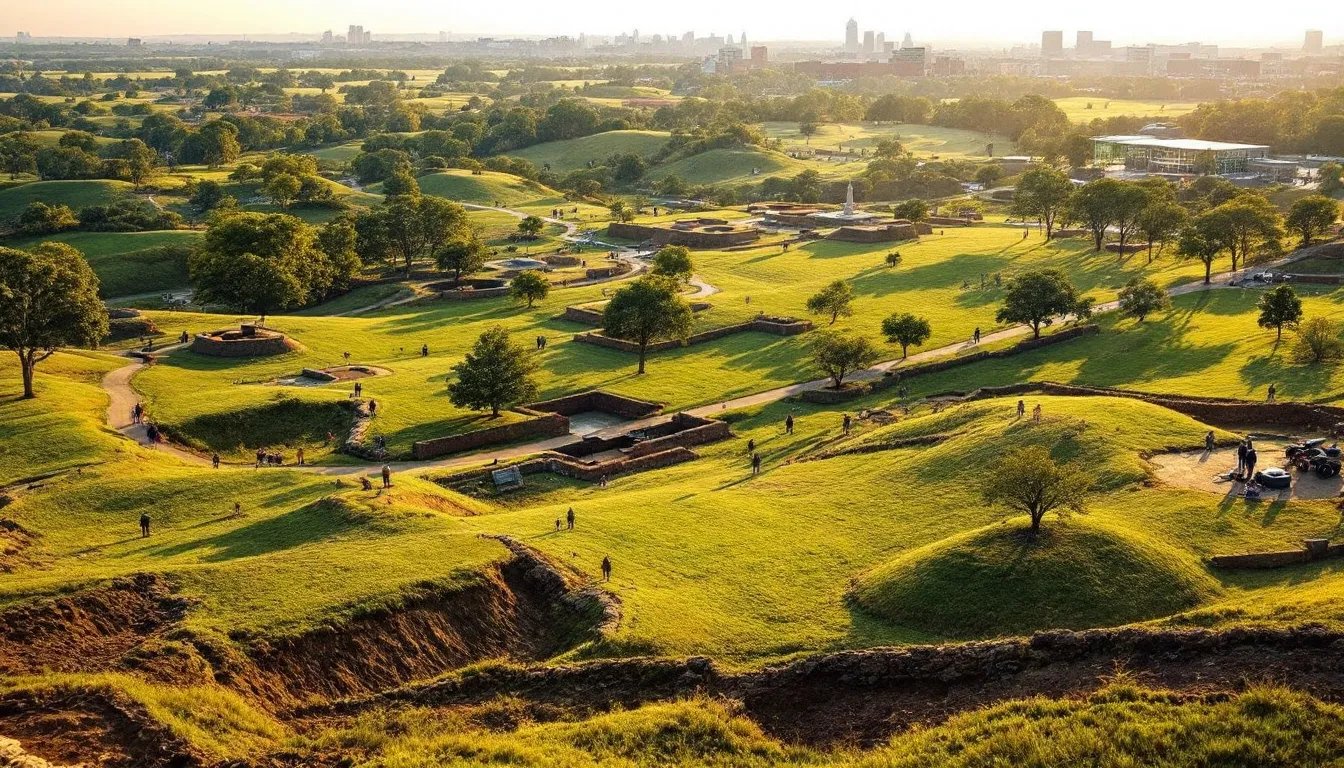
The Cold Harbor site today preserves approximately 300 acres of the original battlefield. Visitors can walk portions of Union approach trenches and Confederate defensive lines, experiencing firsthand the limited visibility and cramped conditions that characterized Civil War combat. The wayside exhibits explain troop positions and movement phases, contextualizing the battlefield as a three-dimensional tactical problem rather than a simple victory or defeat.
Gaines’ Mill And Seven Days Battles
Gaines’ Mill (June 27, 1862) represents the largest engagement of the Seven Days Battles and the first major Confederate offensive victory in Virginia. The battlefield sits roughly 8 miles northeast of Richmond, easily accessible from the Tredegar Visitor Center.
During the Seven Days, General George McClellan’s 110,000-strong Army of the Potomac threatened Richmond from the Peninsula, the flat, marshy region between the York and James rivers. McClellan’s approach seemed methodical: establish siege lines, bring up heavy artillery, and reduce Richmond through engineering superiority rather than assault.
Robert E. Lee, newly appointed commander of Confederate forces, rejected defensive doctrine. With roughly 80,000 troops, Lee launched aggressive offensives against McClellan’s dispersed army, seeking decisive breakthrough rather than prolonged siege. Gaines’ Mill proved Lee’s gamble could work. Confederate forces attacked fortified Union positions, and through repeated assaults and tactical flexibility, broke McClellan’s tactical position sufficiently to force Union withdrawal.
The Seven Days Battles campaign as a whole (June 25–July 1, 1862) drove McClellan away from Richmond, establishing Lee’s reputation as an aggressive, innovative tactician. Strategy game enthusiasts recognize this pattern: recognizing when positional advantage can be leveraged through initiative and aggression, accepting casualties to achieve strategic objectives.
The Gaines’ Mill site preserves approximately 295 acres and includes:
- Walking trails following Confederate and Union positions
- The restored New Cold Harbor tavern (period structure)
- Wayside exhibits explaining assault sequences and troop movements
- Clear sightlines allowing visitors to understand why certain positions were defensible or vulnerable
Fort Harrison And Petersburg Sites
Fort Harrison and Petersburg campaign sites represent different tactical evolution than the 1862 Seven Days battles. By 1864, Civil War combat had fundamentally shifted toward entrenchment, fortification, and attrition warfare.
Fort Harrison’s engagement (September 29–30, 1864) occurred during Grant’s sustained Petersburg Campaign. Union forces assaulted Fort Harrison, a key Confederate fortification, and broke through defensive lines in one of the few successful Union offensive operations of the campaign. The fort’s location between Richmond and Petersburg made it strategically critical, controlling the southern approach to Richmond.
The Petersburg Campaign sites preserve the most extensive trench systems in the park. Visitors can walk sections of the “Cockade Alley” entrenchments, which housed Confederate artillery and infantry positions during the ten-month siege. These trenches showcase how Civil War armies, lacking sufficient manpower for continuous linear defense, created layered fortification systems with supporting positions, artillery emplacements, and prepared fallback lines.
For strategy game players familiar with games like Total War or Hearts of Iron, these sites directly illustrate how fortified positions work, why holding prepared defenses requires fewer troops than attacking them, why supply lines become critical in siege operations, and why terrain advantages compound with engineer investment.
Guided Tours And Educational Programs
Richmond National Battlefield Park offers multiple learning pathways beyond self-directed site exploration. The park’s educational programming spans casual interpretive wayside exhibits to immersive ranger-led experiences.
Self-Guided And Ranger-Led Experiences
The park provides comprehensive self-guided resources. The official “Richmond Civil War Trails” map delineates all eleven major battlefield sites with directional routes, estimated driving times between sites, and suggested sequences based on visit duration. The map includes basic context for each location, engagement dates, unit designations, casualty figures, and key tactical details.
Wayside exhibits at major battlefield sites offer layered interpretation. Primary markers explain what occurred at specific locations, while supplementary exhibits provide unit histories, casualty statistics, and tactical explanations. For visitors wanting deeper engagement, these materials support extended reflection and analysis.
Ranger-led programs supplement self-guided exploration, particularly during spring through fall seasons. These typically include:
- Tredegar Visitor Center programs: Indoor presentations on Civil War strategy, Richmond’s role as Confederate capital, and specific campaign narratives (generally 20–30 minutes)
- Battlefield walks: Rangers guide visitors through specific engagement areas (typically 1–2 hours), explaining terrain advantages, troop positions, and tactical decisions
- Reenactments and anniversary programs: During significant battle anniversaries, the park occasionally hosts living history demonstrations and expanded interpretation
Program schedules vary seasonally. Spring and fall typically offer broader scheduling: summer and winter have more limited availability. The park’s official website and visitor center phone line provide current programming details.
Interactive Learning Opportunities
Beyond traditional interpretive methods, the park has invested in digital resources. The Richmond National Battlefield Park official website includes:
- Digital maps allowing interactive exploration of battle phases and troop movements
- Video presentations on specific campaigns and military leaders
- Audio tours available for download, allowing self-paced narrative exploration while walking battlefield sites
These resources make the park more accessible to visitors who can’t spend extended time on-site. They also serve learners who prefer narrative structure and expert explanation alongside self-directed exploration.
Museum exhibits at the Tredegar Visitor Center showcase period artifacts, equipment displays, and documentary photographs. These materials place battlefield geography within broader strategic and civilian context, understanding not just where soldiers fought, but why Richmond mattered economically, politically, and militarily to both Union and Confederate leadership.
Gaming And Virtual Exploration Of Richmond Battlefields
For strategy game enthusiasts, Richmond National Battlefield Park’s campaigns translate surprisingly well into game mechanics. Several games have incorporated Richmond-area battles, and virtual exploration tools offer digital complements to physical site visits.
Historical Strategy Games Featuring Richmond Campaigns
Multiple strategy game franchises have modeled Richmond-area campaigns. The Total War series, particularly Total War: Shogun and various mods for Total War: Attila, includes American Civil War campaigns with Richmond theater operations. These games abstract actual tactical details while attempting to capture strategic scale, managing supply lines, coordinating multi-unit advances, and adapting to terrain constraints.
Hearts of Iron IV similarly features American Civil War campaigns through community mods that recreate the Seven Days Battles and Petersburg Campaign. These implementations require players to manage resources, develop technology, coordinate between military branches, and make strategic decisions about where to concentrate offensive effort, decision-making directly analogous to what Lee and Grant actually faced.
What games capture imperfectly but suggest valuably: the scale of Civil War armies (60,000–100,000 troops), the importance of entrenched positions in attrition warfare, and how numerical advantage alone doesn’t guarantee breakthrough. Real commanders grappled with supply logistics, weather delays, communication lag, and the difficulty of coordinating complex multi-unit operations, constraints that strategy game designers attempt to model.
Those researching actual Civil War tactics find gaming news coverage of strategy game releases and design sometimes contextualizes historical accuracy discussions in engaging ways, though academic Civil War histories remain essential for precise tactical understanding.
Virtual Reality And Digital Reconstructions
Virtual reality explorations of Richmond battlefields remain limited as of 2026, though digital reconstruction projects exist. The American Battlefield Trust and similar organizations have funded LiDAR-based terrain mapping and three-dimensional battlefield reconstructions that allow digital exploration of sight lines, trench systems, and terrain advantages.
The “Richmond Civil War Virtual Tour” project, developed in partnership with local institutions, creates photogrammetric reconstructions of key sites. These allow visitors to explore digital models of fortifications, viewpoints, and terrain features, useful for visualizing how positions related spatially or understanding defensive advantages of entrenched lines.
Also, augmented reality applications allow smartphone users at physical sites to view historical overlays, seeing period-accurate soldier positions, period maps superimposed on current landscape, or movement diagrams of troop columns. This technology isn’t universally deployed across the park yet, but it represents the future of battlefield interpretation, combining physical site immersion with digital enhancement.
What remains absent: a comprehensive, player-interactive recreation of Richmond battles in VR. Given the market viability of historical experience applications, this represents an opportunity for educational technology development, allowing players to experience terrain from a soldier’s perspective or command-level overview, making abstract strategic concepts tangible.
Planning Your Visit: Tips And Recommendations
Successfully experiencing Richmond National Battlefield Park requires realistic planning. Unlike visiting a single historic site, the park demands itinerary decisions: which battles matter most to your interests, how much time you’ll spend, and what experience level you bring to Civil War history.
What To Bring And How To Prepare
Physical preparation matters. Richmond summers are hot and humid: bring water bottles, sunscreen, and weather-appropriate clothing. Many battlefield sites lack shade, making exposed walking uncomfortable. Spring and fall simplify this, lighter layers and regular water intake suffice.
Comfortable walking shoes are non-negotiable. Battlefield trails vary from paved paths to rough terrain. Some sites require substantial walking (2+ miles) to fully explore: others work well with short 15–20 minute walks. Wear shoes with good ankle support if tackling undeveloped sites.
Navigational preparation prevents frustration. Download the official Richmond Civil War Trails map and consider GPS navigation to specific sites, parking and trailheads can be unclear without advance planning. Phone data connectivity is generally reliable around visitor centers and major sites but can be spotty at remote locations.
Thematic preparation enhances engagement. Before visiting, read a basic history of the Seven Days Battles or Petersburg Campaign. Twenty minutes with a solid overview (like James McPherson’s “Battle Cry of Freedom”) contextualizes what you’ll see far better than arriving cold. Understanding why battles mattered strategically transforms landscape observation from scenic walks into analytical exploration.
Consider bringing:
- Water bottles or hydration system (1–2 liters minimum)
- Sunscreen and hat (sun exposure is significant in open battlefield areas)
- Binoculars (useful for observing distant terrain features and spotting historical markers)
- Notebook and pen (walking battlefields naturally prompts reflection on tactical problems)
- Phone with downloaded maps (cellular service is reliable but battery drain can be significant)
- Comfortable walking shoes with ankle support
For extended visits planning multiple site engagement, consider staying in Richmond proper (downtown Richmond has lodging options within 10–15 minutes of major battlefield sites) rather than driving repeatedly from surrounding areas.
Accessibility And Family-Friendly Options
The park makes conscious efforts toward accessibility. The Tredegar Visitor Center features ADA-compliant restrooms, accessible parking, and wheelchair-accessible exhibits. But, individual battlefield sites vary significantly in accessibility.
Cold Harbor Battlefield and Gaines’ Mill feature paved or well-maintained trails suitable for visitors with mobility limitations. Fort Harrison and some Petersburg sites feature rougher terrain where wheelchair or mobility aid access is limited. Check the park’s accessibility guide before planning specific site visits.
Families with children find the park moderately accommodating. The Tredegar Visitor Center exhibits work for older children (ages 8+) but may overwhelm younger visitors with sustained attention demands. Outdoor battlefield walks naturally appeal to children, climbing earthworks, exploring trenches, and running along historic ground engages kinesthetic learning.
Various sites offer “Junior Ranger” programs where children complete activity booklets while exploring, earning ranger badges upon completion. These programs encourage observation and learning while maintaining child engagement during adult-paced historical exploration.
Families considering battlefield visits should:
- Choose 1–2 sites rather than attempting comprehensive coverage
- Plan 2–3 hour visit blocks with breaks (children manage finite attention spans)
- Start at Tredegar Visitor Center to establish historical context before site exploration
- Select more developed sites (Cold Harbor, Gaines’ Mill) with maintained trails
- Time visits for moderate weather (spring and fall outperform summer extremes)
A first-time family visit might involve Tredegar Visitor Center orientation (1–1.5 hours) followed by Cold Harbor Battlefield exploration (1.5–2 hours), totaling an afternoon activity without excessive travel or fatigue.
Conclusion
Richmond National Battlefield Park offers something relatively rare: a space where history enthusiasts, strategy game players, and casual tourists find genuine engagement. The park isn’t just a tourist attraction: it’s a physical manifestation of strategic thinking, terrain advantage, and the consequences of military decisions.
Whether you’re interested in Civil War history specifically or drawn to the intersection of geography, tactics, and large-scale conflict simulation, the park rewards intentional exploration. Understanding why Lee attacked at Gaines’ Mill, why Grant’s Petersburg Campaign depended on entrenchment and attrition, or how Richmond’s geographic position shaped military strategy transforms landscape observation into analytical engagement.
The park’s eleven sites can absorb anywhere from a focused afternoon (visiting Tredegar and one battlefield) to an extended multi-day exploration of Virginia’s Civil War geography. Proper preparation, basic historical context, realistic site selection, comfortable physical setup, transforms casual site-seeing into meaningful engagement with how geography, logistics, and tactical decisions shape outcomes.
For those combining physical site visits with strategy game interest, Richmond offers tangible grounding for abstract game mechanics. Walk the trenches at Petersburg and Cold Harbor, and the importance of fortified positions becomes visceral. Observe Cold Harbor’s terrain, and you understand why Union commanders believed assault was necessary even though apparent defensive advantage.
Richmond National Battlefield Park stands in 2026 as a underrated destination offering historical depth, strategic complexity, and genuine educational value, whether you’re visiting as a history student, a strategy game enthusiast seeking real-world context, or simply someone interested in understanding how landscape and military decision-making intersect.


