
Table of Contents
ToggleBattlefield has always been about controlled chaos, massive maps, vehicle warfare, and destructible environments that reward smart positioning and squad coordination. Whether you’re loading into your first match or grinding ranked, understanding what makes Battlefield tick is the difference between getting stomped and dominating lobbies. This guide cuts through the noise and gives you the exact strategies, hardware setups, and playstyle adjustments that separate casual players from competitors. We’ll break down game modes, platform-specific tips, and the meta shifts that matter in 2026, so you can hit the ground running and turn battlefield adventures into real wins.
Key Takeaways
- Battlefield adventures emphasize large-scale multiplayer warfare with vehicle combat and destructible environments that reward squad coordination and map control over individual gunplay.
- Platform choice (PC for competitive precision, console for accessible performance, or mobile for casual progression) directly impacts your competitive ceiling and progression speed.
- Master one game mode like Conquest for 50+ hours before switching, as repetition builds map awareness, spawn knowledge, and positioning that separate casual from competitive players.
- Squad communication and role designation—using voice callouts, coordinating spawns, and protecting support players—are the difference between losing matches and dominating lobbies.
- Mid-range hardware ($1200–1400 on PC or $500 console) paired with optimized settings (144+ fps, lower mouse sensitivity, proper crosshair setup) removes technical barriers to competitive play.
- Competitive Battlefield progression from casual to ranked requires 100+ hours of consistent play focused on objectives, positioning, and adaptation rather than raw mechanical skill alone.
What Are Battlefield Adventures?
Battlefield adventures represent the full scope of what modern Battlefield titles offer: large-scale multiplayer warfare, cinematic single-player campaigns, and dynamic events that keep the experience fresh. Unlike tight, corridor-focused shooters, Battlefield emphasizes scale and freedom. You’re not just fighting in a 6v6 deathmatch: you’re managing 32v32 (or larger) matches with helicopters, tanks, and environmental destruction that fundamentally shifts how you approach combat.
The “adventure” part matters. Battlefield games blend competitive ranked play with casual matches, seasonal content drops, limited-time events, and specialist abilities that encourage experimentation. The meta isn’t locked down by a single weapon class or playstyle, instead, success comes from adapting to map conditions, squad composition, and the opponents you’re facing. Recent versions have leaned hard into specialists with unique gadgets and perks, adding a layer of personality and loadout customization that older titles didn’t offer.
If you’re coming from Call of Duty or Valorant, unlearn tight-quarters gunplay. Battlefield rewards map control, vehicle dominance, and objective play. Your job isn’t just kills: it’s capturing flags, destroying objectives, and supporting squadmates. That’s where the real adventures happen, in moments where communication and positioning turn a 2v5 into a clutch victory.
Choosing Your Platform: PC, Console, or Mobile
Your platform choice shapes your entire Battlefield experience. Frame rates, controller feel, player density, and graphical fidelity differ wildly across PC, consoles, and mobile, and your competitive ceiling is directly tied to which you choose. Here’s what you need to know.
PC Battlefield Adventures
PC is the competitive standard. Frame rates hit 144+ fps easily on mid-range hardware, mouse and keyboard give you unmatched flick accuracy, and the community tends to be more hardcore. If you’re serious about ranked play or streaming, PC is your lane.
What you get:
- 144+ fps at 1440p on a $800–1200 rig (RTX 4060 Ti, Ryzen 5 7600X minimum)
- Mouse precision for headshot accuracy and ADS (aim down sights) snap
- Ray-traced graphics on high-end systems, though competitive players turn them down for visibility
- Larger player pool and more active ranked matchmaking
- Accessibility to pro tournaments and esports-level competition
The trade-off? You’re competing against players with high-refresh monitors, optimized settings, and aim trainers. The skill gap is steeper, but the payoff is worth it if you’re chasing competitive growth.
Console Gaming Experience
Console players, both PS5 and Xbox Series X, occupy the sweet spot between accessibility and performance. Both platforms run Battlefield at 120 fps with ray tracing enabled, and the player base is massive. Controller aim assist is tuned fairly aggressively on console, making gunplay rewarding even for casual players.
PS5 and Xbox Series X specifics:
- 120 fps at 1080p–1440p (depending on settings and game version)
- Controller-native aim assist (critical for console competitiveness)
- Cross-play enabled between Xbox and PlayStation, but PC players can opt in/out
- Faster loading times compared to last-gen, crucial for respawn flow
- Exclusive cosmetics and sometimes early access to new seasons
Console ranked is thriving and competitive without being as punishing as PC. If you’ve got a 120 Hz monitor and a solid gaming chair, console is a viable competitive path. Just know that you’re not getting raw mouse precision, you’re getting flow and consistency through controller tuning.
Mobile Battlefield Options
Mobile Battlefield titles (like Battlefield Mobile, available on iOS and Android) are lightweight alternatives, not full feature parity. They’re great for grinding battle pass progression on your commute or casual squad play with friends who don’t own consoles or PCs.
Reality check on mobile:
- Stripped-down versions of the main game (fewer maps, smaller player counts, simplified mechanics)
- 60 fps cap on most phones, occasional frame drops on lower-end devices
- Cross-progression with main title (if available in your region)
- Shorter matches, faster progression, good for casual play
- Not viable for competitive ranked play due to input lag and frame rate limits
Mobile is a supplement, not a replacement. Use it to warm up, grind dailies, or introduce friends to the franchise, but your serious hours belong on PC or console.
Essential Tips for New Players
New players often make the same mistakes: chasing kills instead of objectives, ignoring squad spawns, and using default settings that cripple their aim. Here’s how to skip those rough months and build proper habits immediately.
Understanding Game Modes and Objectives
Battlefield’s win condition changes per mode. Deathmatch (TDM) is kill-focused, but Conquest is about capturing and holding flags. If you’re playing Conquest like it’s TDM, you’re bleeding points and losing matches even though a positive K/D.
Core modes you’ll encounter:
- Conquest: Hold flags to accumulate tickets. Last team with tickets remaining wins. Objective play > raw kills.
- Rush: Attackers plant bombs on objectives: defenders stop them. Asymmetrical and momentum-heavy.
- Breakthrough: Linear map progression for attackers vs. stationary defenders. Vehicle-heavy and dynamic.
- Hazard Zone / Extraction Modes: Collect items and extract with your squad. High-stakes, squad-dependent.
- Team Deathmatch: Pure elimination mode. Your score resets every match: focus on frags and not much else.
Pick one mode and spam it for 50+ hours. Don’t jump between modes constantly. You’ll learn map flow, spawns, and effective strategies much faster with repetition. Most competitive players stick to Conquest or Breakthrough because those modes reward positioning and coordination.
Mastering Movement and Map Awareness
Movement in Battlefield isn’t just sprinting forward. You need to understand cover, sightlines, and the radar. Bad movement gets you flanked. Good movement gets you kills and keeps you alive.
Movement fundamentals:
- Strafe while engaged. Don’t stand still during firefights. Left-Right movement makes you harder to hit.
- Pre-aim corners. Keep your crosshair at head height and angle it toward expected enemy positions before you turn corners.
- Use vehicles for map rotation. Helicopters and tanks aren’t just firepower: they’re fast transit. Don’t waste them.
- Slide into cover. Momentum and positioning matter more than pure speed.
- Check your radar constantly. Spotted enemies show on your minimap. Teammate deaths show proximity to threats.
Map awareness separates decent players from good ones. Watch your minimap every 2–3 seconds. Notice where teammates are pushing. Identify which objectives are uncontested. Call out flanks to your squad. This isn’t flashy gameplay, but it’s what wins close matches.
Weapon Selection and Loadout Strategy
Battlefield’s meta shifts with patches, but the fundamentals hold: pick weapons that match your playstyle and the map size. A DMR (designated marksman rifle) on a tight urban map is suboptimal. A close-quarters SMG on a wide-open vehicle-heavy map gets punished.
Loadout building 101:
- Primary weapon: Choose by engagement distance. Assault rifles for mid-range, SMGs for CQB, sniper rifles for long sightlines, shotguns for doorways.
- Secondary: A pistol or melee. Don’t sleep on melee in clutch moments.
- Equipment: Grenades, C4, medical crates, ammo boxes, utility tied to your role. Supports carry ammo boxes: Assault carries grenades: Recons place motion sensors.
- Attachments: Optics matter more than you think. 1x or 2x for aggressive play, 3.5x for mid-range, scoped for sniping. Muzzle brakes reduce recoil: suppressors hide your muzzle flash at the cost of velocity.
Test weapons in practice modes or casual matches before committing to ranked. The gun that felt unstoppable in a clip might not fit your sensitivity or playstyle once you’re under pressure. Tweak, play 10–20 matches, then assess whether the loadout is holding you back or the player needs improvement.
Advanced Strategies for Competitive Play
Once you’ve logged 100+ hours, it’s time to stop playing as an individual and start playing as a unit. Competitive Battlefield revolves around squad coordination, map control, and mechanical execution at pace.
Squad Coordination and Team Communication
Solos lose matches. Squads of four players with mics, callouts, and shared objectives win them. The difference is stark.
Squad fundamentals:
- Designate roles. One player calls shots (shot-caller). Others execute. Clear hierarchy prevents confusion during engagements.
- Use voice comms. Ping systems help, but verbal callouts with range and direction are faster. “Enemy sniper, top window, 150m” is actionable.
- Squad spawning is a mechanic. If a squadmate dies and respawns on you, the team has free positioning. Abuse this. Coordinate pushes so teammates spawn into live positions, not empty areas.
- Revives and support matter. If your medic is alive, downed teammates get back in 3 seconds. If they’re dead, you’re down a player. Protect supports, treat revives as high-priority targets.
- Communicate loadout changes. If you switch to a sniper mid-game, tell your squad. They’ll adjust their play accordingly.
Teams that coordinate ult timings, focus fire on priority targets, and rotate together dominate pub matches. You’ll notice the difference immediately.
Map Control and Positioning Techniques
Control territory, not just real estate. Holding a flag doesn’t mean standing on its point: it means denying enemy sight angles and creating crossfires.
Positioning principles:
- Hold high ground when available. Elevated positions let you see and shoot enemies before they see you. Massive advantage in Battlefield’s vertical maps.
- Trade visibility for safety. Standing in the open with superior sightlines beats hiding behind cover with limited vision. Predict enemy rotations and place yourself where they’ll appear.
- Use vehicles for area denial. A helicopter or tank sitting on a flags prevents enemy pushes and farms kills. Don’t tunnel on one flag: rotate vehicles between contested zones.
- Anticipate spawns. Enemies respawn at nearby squad spawns or static spawn points. Camp respawn exits briefly after clearing an area, or leave and let them reset.
- Adapt to team performance. If your team is losing a flag, rotate to defend the next one. Don’t reinforce failure: shift resources to winnable fights.
Watch pro players and high-rank streamers. Notice where they position relative to teammates. Notice where they don’t go. That’s learned map knowledge, and it compounds over time.
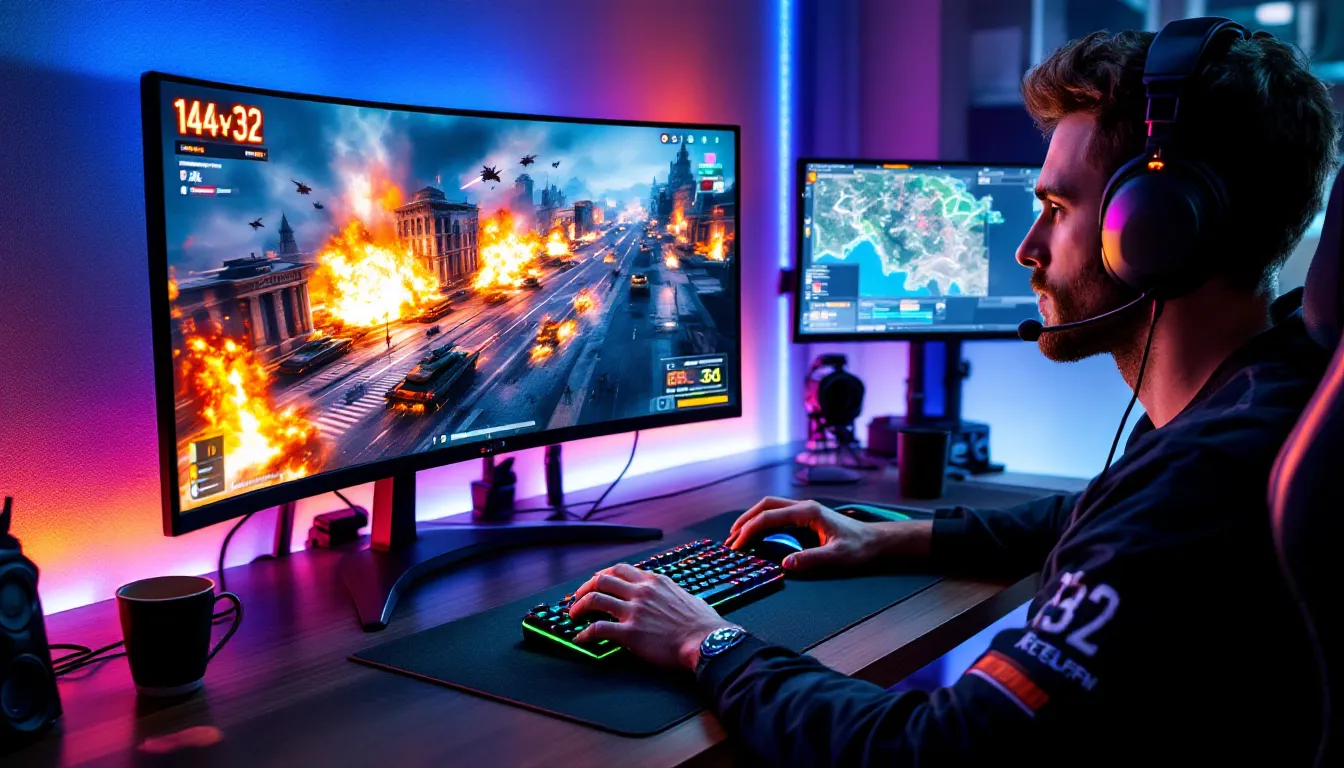
Optimizing Your Settings for Peak Performance
Mechanical skill matters, but so does your rig’s responsiveness. A laggy, stuttering PC will hold you back no matter how good your aim is.
PC settings for competitive play:
- Frame rate: Unlock it. 144 fps minimum, 240+ if your hardware allows. Frame rate directly impacts perceived input lag.
- Mouse sensitivity: Lower is better. Most pros use 400–800 DPI with in-game sensitivity 50–60%. Higher sens feels faster but is harder to control. Find your sweet spot and stick with it for weeks.
- Aim assist (console): Keep it at default or experiment with slight reductions if you want pure mechanical aim, but don’t turn it off. It’s a tool.
- Crosshair color and opacity: Bright, high-contrast colors (lime, magenta) stand out against backgrounds. Some players disable it for increased FOV.
- Field of View (FOV): 90–110 FOV is standard. Higher FOV lets you see more but shrinks distant targets. Balance visibility and clarity.
- Motion blur and post-processing: Off for competitive. They create visual noise that slows reaction time.
- Net smoothing: Disabled. You want raw input without interpolation.
Test settings in casual matches, not ranked. Small tweaks to sensitivity or FOV feel jarring for the first few hours, muscle memory needs time to adjust. Don’t chase pro settings blindly. Find what feels responsive and repeatable for you, then grind hours to stabilize.
Exploring Different Game Modes
Battlefield’s strength is variety. Mastering one mode makes you a specialist: understanding all of them makes you adaptable and keeps gameplay fresh across 100+ hours.
Multiplayer Battles and Large-Scale Warfare
Multiplayer is where most players spend time. 32v32 or 64v64 matches reward different skills than smaller competitive formats.
What defines multiplayer warfare:
- Vehicle balance is critical. Tanks, helicopters, and jets swing outcomes. Learning to pilot and counter-pilot is mandatory for competitive multiplayer.
- Objective variety keeps matches dynamic. One team might dominate gunfights but fail to cap flags: another team coordinate pushes on objectives even though lower mechanical skill.
- Destruction creates emergent gameplay. Buildings collapse, roadblocks disappear, cover vanishes. This unpredictability separates memorized map routing from adaptive play.
- Spawn logic matters. Squads spawn near squad leaders: individual players spawn at bases or nearest allies. Smart squad placement creates tactical advantages.
Multiplayer matches are chaotic, but patterns emerge. Play 20 matches on the same map, and you’ll identify where teams congregate, where kills are easy, and where matches are decided. Resources (like vehicle spawns) are finite. Control them, and you control the match. Some players recommend exploring different Battlefield titles to understand how the franchise has evolved its multiplayer formula.
Campaign and Story-Driven Adventures
Campaigns aren’t just story filler. They’re training grounds for mechanics and a break from multiplayer’s high-stakes grind.
Single-player value:
- Specialized training. Campaign missions force you to learn vehicle controls, stealth mechanics, and environmental destruction in lower-pressure settings.
- Narrative context. Modern Battlefields weave specialist backstories and world-building into campaigns. Understanding the lore makes multiplayer cosmetics and seasonal events more meaningful.
- Reward progression. Completing campaign missions unlocks cosmetics and battle pass progression in multiplayer.
- Disconnected engagement. Some days you’ll want co-op missions with friends instead of ranked anxiety. Campaign provides that outlet.
Don’t skip the campaign. Especially if you’re new, it’s gentler than getting stomped in multiplayer while learning controls. Solo or with friends, campaign missions are solid entertainment with tangible multiplayer rewards.
Special Events and Limited-Time Challenges
Seasons bring fresh events, limited-time modes, and exclusive cosmetics. FOMO (fear of missing out) is real, but it’s also legitimate content.
What to expect from seasonal content:
- Limited-time modes: 2–4 week windows for new map variations, ruleset experiments, or themed gameplay. These rotate out and don’t return immediately.
- Battle passes: 100-tier progression tied to cosmetics, weapon skins, and operator skins. Tier progression is tied to playtime, not skill.
- Exclusive cosmetics: Legendary skins, weapon blueprints, and emotes only available during events. Miss the window, and you’re locked out until they rotate back (months later, if at all).
- Narrative events: Seasonal stories with missions and unlockable rewards tied to ongoing plot threads.
Prioritize battle pass completion if cosmetics matter to you. If cosmetics don’t matter, events are optional fun, don’t burn out chasing cosmetics. The game itself is the hook: cosmetics are flavor. Play what’s fresh, skip what’s stale.
Building Your Gaming Setup
Your hardware influences your ceiling. You can’t compete at high ranks on a laptop with 60 fps and a trackpad (yes, people try). Here’s what you actually need to perform and stay comfortable.
Hardware Recommendations for Smooth Gameplay
You don’t need a $3000 rig. Mid-range hardware gets you 120+ fps, which is the competitive baseline.
PC build for Battlefield (1440p, 120+ fps):
- CPU: Ryzen 5 7600X or Intel i5-13600K ($200–250). 6-core minimum: more cores help if streaming.
- GPU: RTX 4060 Ti or RX 6700 XT ($350–400). Ray-traced 1440p at 120 fps. Upgrade to 4070 Super ($400–450) if you want high settings + 144 fps.
- RAM: 32GB DDR5 ($120–150). Overkill for Battlefield alone, but future-proofing and streaming require it.
- Motherboard: B650 ($150–200). Budget-friendly: supports upgrades.
- Storage: NVMe SSD, 1TB minimum ($70–100). Battlefield alone is 150GB+.
- Power supply: 750W 80+ Gold ($80–120). Room for upgrades.
- Case + cooling: $100–150 total. Keep CPU under 80°C: GPU under 75°C.
Total: $1200–1400 for a solid 1440p rig. Cuts to $800–900 if you drop to 1080p and medium settings.
Console (PS5 or Xbox Series X):
- Hardware cost: $500 (usually discounted). Locked specifications, no upgrade path.
- Performance: 120 fps at 1440p guaranteed. Simpler than PC troubleshooting.
- Trade-offs: No mouse precision, less granular control over visual settings, no third-party mods.
Console is cheaper upfront and requires zero optimization knowledge. PC is pricier but offers control and scalability. Either gets you competitive.
Peripheral Upgrades That Make a Difference
Your keyboard and mouse matter as much as your GPU. They’re the interface between your brain and the game.
Essentials:
- Gaming mouse: 60–100 USD. Look for lightweight models (sub-80g), 8000 Hz polling rate, and clean sensor. Corsair M65 Core, Razer DeathAdder V3, Logitech G Pro X, all solid. Avoid heavy budget mice: they feel mushy.
- Mechanical keyboard: 80–150 USD. Linear switches (Red/Black) for smooth actuation: clicky switches (Blue) for tactile feedback. Stabilizers matter, spend extra on lubed stabs. Keychron, Ducky, GMMK are reliable brands.
- Mousepad: 30–60 USD. Hard pads (QcK, Artisan) for speed: cloth (SteelSeries, Logitech) for control. Size matters, at least 12×10 inches.
- Monitor: 200–400 USD. 1440p, 144 Hz minimum. 240 Hz if your GPU supports it. IPS panels have better colors: TN panels have faster response times. Most competitive players prefer 1440p 144Hz.
- Headset: 100–200 USD. Open-back for soundstage (footsteps, vehicle audio): closed-back for isolation. Audio Technica, SennHeiser, HyperX, skip gaming-branded gimmicks. Good audio lets you hear enemy positions before you see them.
Don’t buy all at once unless money’s no object. Prioritize mouse, keyboard, and monitor, these directly impact aim and awareness. Upgrade headphones and chair later. Pro players will spend hours optimizing these, which is why many reference professional settings for baseline configurations, though your personal comfort always comes first.
Joining the Esports Community
Competitive Battlefield is thriving in 2026. Whether you’re chasing esports salaries, building a streaming audience, or just grinding ranked for the thrill, here’s the landscape.
Competitive Tournaments and Rankings
Battlefield esports operates through franchised leagues, grassroots tournaments, and open qualifiers. Different paths exist depending on your skill and commitment level.
Ranked play structure:
- Matchmaking rating (MMR) or ranked tier tracks your competitive level. New players start bronze: pros are in top 500 globally.
- Seasonal resets happen every 6–8 weeks. You drop a tier or two, forcing re-qualification.
- Rank-gated cosmetics reward high-rank finishes. Gun skins, operator cosmetics, and titles tied to end-of-season placement.
Tournament pathways:
- Open qualifiers: Anyone can enter. Usually single-elimination or round-robin. Entry fees range from free to $50. Prize pools vary ($500–$50k depending on tier).
- League play: Franchised teams compete in regional divisions. Only reachable by being recruited or forming a pre-made squad.
- Professional circuit: Sponsored teams, salary contracts, sponsorship deals. Top-tier esports requires 4+ teammates grinding 40+ hours weekly.
You don’t need esports aspirations to enjoy competitive play. Ranked is the game’s competitive mode, treat it seriously, develop consistency, and you’ll naturally improve. Pro players often discuss esports news and tournament updates as part of their daily content consumption.
Streaming and Content Creation Opportunities
Streaming is the side door into esports visibility. A 1000-viewer stream gets sponsorships and org interest faster than a 2000 MMR rank.
Streaming viability for Battlefield:
- Twitch: Dominant platform. Concurrent viewers fluctuate by season, but 15k–30k watch Battlefield across all streamers daily. Lower-tier streamers (100–1000 viewers) can monetize at 4+ streams weekly.
- YouTube: Secondary but growing. VODs are searchable and recommended by algorithm, giving content longer shelf-life than Twitch clips.
- TikTok: Short-form clips. Meme potential and mechanical highlights spread fast here.
Content angles:
- Educational: Guides, loadout breakdowns, tips for specific maps. Audiences love learning.
- Entertainment: Personality-driven streams where skill is secondary to banter with chat and squad mates.
- Competitive grind: Ranked pushing, tournament runs. Higher-skill audiences tune for gameplay, not talk.
- Challenge runs: Limited loadout runs, no-vehicle matches, class-specific challenges. Novelty captures attention.
Starting is free (use OBS, set up a Twitch channel, buy a decent mic for $80–150). Growing takes consistency: 3–5 streams per week minimum, 2–3 hour sessions, regular schedule. Most streamers spend 6–12 months building to 500 followers. Sponsorships, affiliate codes, and sub revenue compound after that. It’s not overnight money, but it’s viable if you’re entertaining and skilled.
Conclusion
Battlefield adventures aren’t about a single moment of glory, they’re built from hundreds of small decisions: positioning yourself 1 meter left instead of right, calling out a flank 2 seconds earlier, adjusting your sensitivity 5 points for better tracking, and showing up with your squad every match instead of playing solo. The gap between casual and competitive is commitment and repetition, not talent.
Start by choosing your platform and committing to it. Invest in basic hardware that won’t bottleneck your performance. Pick one game mode and learn its rhythms. Build a squad of consistent teammates. Study pro players to see how positioning and resource management translate to wins. Grind ranked knowing that rank is a lagging indicator of skill, improvement comes before visible progress.
Battlefield’s scale and vehicle-centric design create unpredictable moments that other shooters can’t match. Mastery comes from adapting to that chaos, not controlling it. The 100+ hours you put in aren’t wasted grinding: they’re investing in pattern recognition and mechanical reflexes that carry across games and years.
Your first month will feel chaotic and overwhelming. Your second month, objectives click into place. By month three, you’re recognizing where threats come from and rotating proactively. By six months, you’re competing in ranked and considering esports paths if you want them. The adventure isn’t one match, it’s the entire journey. Embrace it, communicate with teammates, and stay patient. The skill comes.


