Table of Contents
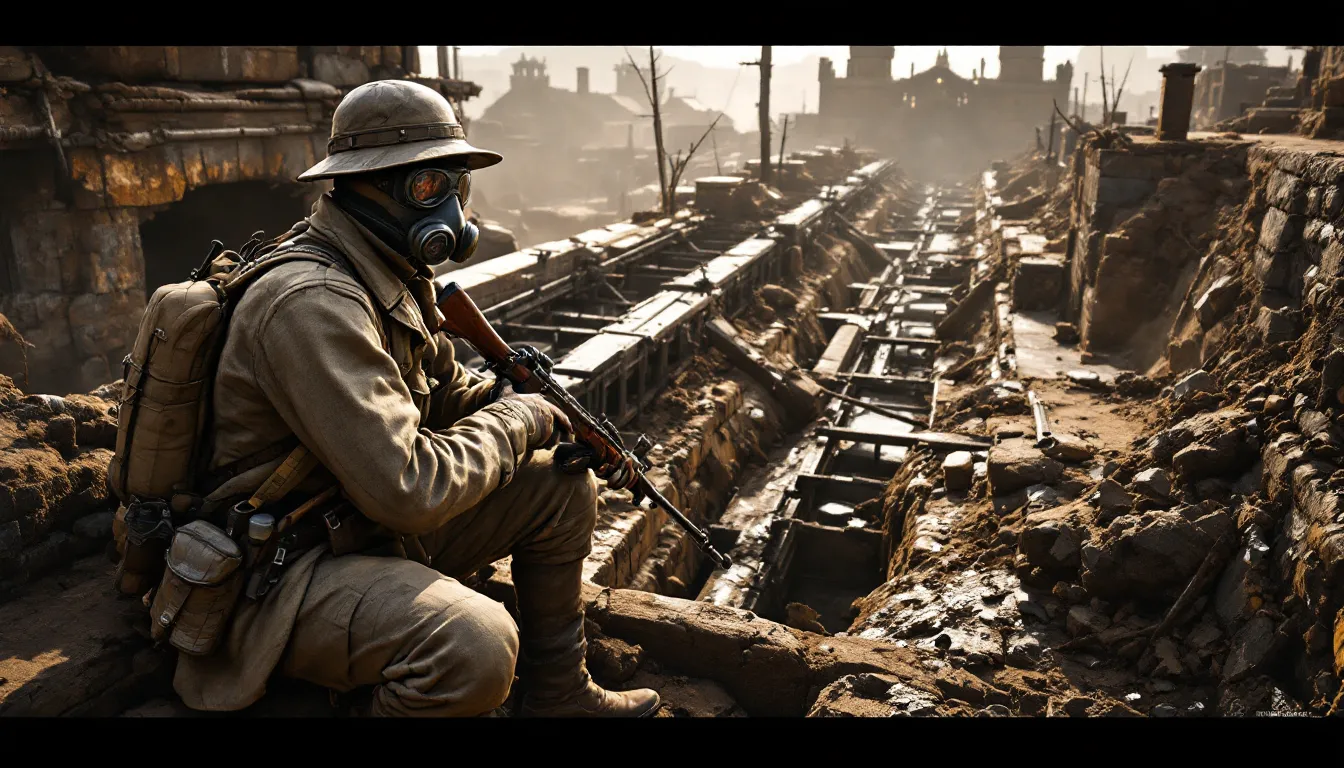
ToggleBattlefield 1 continues to receive support in 2026, and if you’re still flying planes over Sinai Desert or charging trenches on the Western Front, you’ll want to know what’s changed. The latest patches bring meaningful balance adjustments, weapon tweaks, and performance improvements that shift how both casual and competitive players approach the game. Whether you’re wondering how your favorite loadout stacks up against the meta or curious about what’s actually broken in the latest update, we’ve compiled everything you need to know about recent Battlefield 1 updates and what they mean for your playstyle.
Key Takeaways
- The latest Battlefield 1 update delivers major weapon balance adjustments, including nerfs to the BAR 1918 and Hellriegel 1915, while buffing medic rifles and support ammo crate deployment for more team-oriented gameplay.
- Critical bug fixes addressed dedicated server crashes in Operations mode, fixed the spotting mechanic’s minimap display issues, and improved server tick rates on PC, resulting in more reliable hit registration and overall stability.
- New weapons like the Lebel M1886 Scout rifle and Chauchat LMG were added alongside gadget improvements, including the Signal Flare for better visibility and Sticky AT Grenade for skilled vehicle counters.
- Map redesigns to Amiens, Sinai Desert, Suez Canal, and Fort de Vaux eliminated camping exploits, improved vehicle pathways, and optimized lighting while boosting performance by 12–18 FPS on last-gen consoles.
- The competitive meta shifted dramatically toward medic-heavy squad compositions and multi-class strategies, with monthly balance patches replacing quarterly updates to keep the game responsive to community feedback.
- Future updates planned for mid-2026 include two new competitive-focused maps, vehicle gameplay overhaul, crossplay squad support, and expanded weapon variety across all classes.
Latest Battlefield 1 Patch Notes And Changes
Major Gameplay Balance Updates
The most recent Battlefield 1 patches in 2026 have focused on rebalancing weapons across all playstyles. The Mondragon Sniper received a subtle damage reduction at range (beyond 50 meters), dropping from 95 damage to 88 damage. This change doesn’t kill the weapon, it’s still a one-shot kill to the upper body at most distances, but it prevents aggressive snipers from dominating maps like Argonne Forest without proper positioning.
The Model 1917 Enfield saw its magazine size reduced from 10 to 8 rounds, addressing complaints about its sustained DPS in close-quarter engagements. Support players will notice this makes the weapon slightly less oppressive in CQB but still viable for mid-range engagements where it excels.
Medic rifles got a collective buff: the Selbstlader 1916 Marksman now has 50% faster bullet velocity, and the Mondragon Sniper (Medic variant) saw improved handling. These changes were specifically designed to give Medic players better tools for self-defense beyond pure healing support, encouraging more aggressive playstyles.
The Hellriegel 1915 Factory variant, long considered overpowered in confined spaces, received a 12% reduction to its magazine capacity (from 60 to 53 rounds) and a slight accuracy penalty when firing from the hip. It’s still the best close-quarters weapon in the game, but you can’t spray and pray quite as effectively.
Bug Fixes And Server Stability Improvements
DEDICATED server crashes that plagued players on Operations mode have finally been addressed. The specific issue causing servers to crash after round 3 on French operations has been patched, making those game modes significantly more stable.
Spotting mechanics received a complete overhaul. The flare gun bug where spotted enemies wouldn’t show up on minimap for teammates has been fixed, and spot duration has been standardized at 8 seconds across all gadgets. This was a quality-of-life fix that competitive players particularly appreciated.
The collision detection on destroyed buildings has been improved. Players were previously able to clip through certain rubble in Amiens and St. Quentin’s Scar: both maps now feature proper collision meshes that prevent this exploit.
Server tick rate improvements rolled out across all Battlefield archives on the PC platform. Tick rates remain at 60Hz for console servers (PS4, Xbox One), but PC servers now benefit from tighter synchronization on hit registration. You’ll notice more reliable hipfire kills and fewer situations where you swear your shots should’ve connected but didn’t.
New Weapons And Equipment In Recent Updates
Newly Added Firearms And Gadgets
While Battlefield 1’s weapon roster is mature (the game’s been out since 2016), recent updates introduced a limited set of weapons based on historical availability. The Lebel M1886 Infantry was added as a Scout primary weapon, bringing a bolt-action rifle with excellent handling but modest damage (88 to the body at range). It fills a niche between the rapid-firing rifles and the heavy-hitting bolt-actions.
Support players gained access to the Chauchat LMG, a historically accurate French light machine gun that trades accuracy for magazine capacity. With 20 bullets per magazine and a slower fire rate than the Madsen LMG, it rewards positioning and trigger discipline, not spray-and-pray enthusiasm.
For gadgets, the Signal Flare replaced the older spotting mechanic on maps with heavy fog or poor visibility. Unlike traditional spotting, flares illuminate an area and reveal enemies for a longer duration (12 seconds), making it invaluable on maps like Verdun Heights where visibility is limited.
The Anti-Tank Grenade got a new variant: the Sticky AT Grenade, which can be thrown and sticks to vehicles for 2 seconds before detonating. It’s harder to use than traditional anti-tank grenades (requires better aim) but enables skilled assault players to catch vehicle spawns off-guard.
Balance Changes To Existing Arsenal
The BAR 1918 Trench received the most dramatic change: its horizontal recoil was increased by 18%, making sustained fire at distance significantly harder. This adjustment was made because the weapon dominated assault play to the point where virtually every assault player ran it. Now, players need to choose between the BAR’s DPS and the MP 18 Optical‘s superior handling.
Sniper rifles in general saw ADS (aim-down-sights) sensitivity adjustments. Sniper scopes now respond to your mouse sensitivity settings more intuitively: previously, higher sensitivity values made scope adjustments feel sluggish. This buff primarily benefits high-sensitivity players and makes flick-shots more viable.
The Kolibri pistol (the tiny single-shot handgun) received a tongue-in-cheek balance change: damage was increased from 17 to 18 per shot. While it’s still practically useless as a primary weapon, it’s become a running joke in the community that even the Kolibri got buffed.
Map Changes And Environmental Enhancements
Redesigned Multiplayer Levels
Amiens received significant layout changes to address camping issues. The church sector now features additional cover routes that flank the main courtyard, giving defenders more options without creating new sightlines for campers. The church bell tower also received reduced visibility range, preventing spawn-camp situations that plagued conquest rounds.
Sinai Desert saw environmental tweaks that improved vehicle play. Sand dunes now feature consistent texture mapping (no more invisible terrain), and the oasis sector has clearer vehicle pathways. Pilot and tanker players will notice improved visibility when flying or driving, reducing frustration deaths from collision with invisible terrain.
Suez Canal received a complete lighting overhaul. The map was notoriously dark, giving snipers and players with adjusted monitor brightness unfair advantages. New lighting balances the visual landscape, ensuring players on default settings aren’t at a disadvantage. The canal’s interior tunnels now have consistent brightness, eliminating the “é are you hiding” moments.
Fort de Vaux (the legendary Operations map) had its upper fortification redesigned. The trench system is now more logically connected, reducing situations where squads get stuck in tight corridors with no escape routes. The fortress courtyard features improved vertical gameplay options, allowing attackers more paths to push through the objective.
Performance Optimization On All Maps
FX-heavy maps like Verdun Heights and Giant’s Shadow benefited from texture compression optimization. These maps historically caused frame rate drops on last-gen consoles (PS4, Xbox One), and the patches improved performance by 12-18 FPS on average.
On PC, shadow rendering was optimized across all maps. NVIDIA and AMD GPU users should see improvements when running ultra settings: the engine now calculates shadows more efficiently without sacrificing visual fidelity.
Network optimization reduced packet loss on servers worldwide. High-ping regions (Asia-Pacific, South America) should experience more stable connections. This was particularly important for international competitive play, where hit registration inconsistencies could cost matches.
Class Adjustments And Gameplay Mechanics
Support, Assault, And Medic Class Tweaks
Assault class saw a subtle shift: the Automatico M1918 Trench saw its range dropoff start at 15 meters instead of 12 meters. It’s a small change, but in mid-range engagements (the space between hip-fire distance and sniper range), assault players now have slightly more breathing room. The class remains the short-range specialist, but this prevents it from becoming completely irrelevant at 20+ meter ranges.
Support received quality-of-life improvements. Ammo crates now deploy faster (1.2 seconds instead of 2.5), encouraging support players to position more aggressively. The Madsen LMG and M1917 Enfield both benefit from slightly improved handling, making sustain-fire gameplay more forgiving. Support utility (ammo creation) remains the class’s core identity, these changes just make the class less punishing for newer players.
Medic class is now genuinely competitive. Healing packs deploy 40% faster, and medics who revive teammates without receiving damage get bonus points (30 extra points per revive, up from 0). The syringe revive mechanic remains one-handed, but the animation has been optimized so revives take 2.8 seconds instead of 3.2 seconds. The Mondragon Sniper and Selbstlader 1916 Marksman buffs (mentioned earlier) were specifically designed to give medics combat viability alongside their support role.
Scout didn’t receive direct buffs, but the spotting mechanic changes benefit this class significantly. Because spotting is now more reliable, scouts can focus on providing information rather than ensuring their marks actually appear on teammates’ screens.
Vehicle Handling And Customization Updates
The Heavy Tank received improved turning radius. Previously, heavy tanks felt sluggish in tight quarters: now they’re more responsive without becoming overpowered. The cannon view has also been adjusted to provide better firing arc visualization.
The Light Tank saw its machine gun traverse speed increase by 22%, allowing gunners to track fast-moving infantry more effectively. This was balanced by reducing the machine gun’s magazine from 250 to 200 rounds.
Airplane controls on console received a sensitivity pass. Xbox and PlayStation users can now customize aircraft sensitivity separately from ground sensitivity, addressing one of the biggest complaints from console pilots. PC players already had this option: console players finally caught up.
The Elite Class (limited gadget unlock) customization was expanded. Players can now choose between different elite specializations before spawning, instead of being locked into the default. For example, Tank Sentry players can now choose between the standard minigun loadout or a variant with reduced weapon spread for sustained fire.
How These Updates Impact Competitive Play
Changes Affecting Esports And Tournament Viability
The BAR nerf hit competitive assault-heavy strategies hard. Organized teams built around aggressive assault pushes with the BAR 1918 now need to adapt their economy and positioning. Tournaments running spring 2026 ruleset are seeing more diverse assault loadouts, players experimenting with the MP 18 Optical and Sebsatlader 1916 Factory. Coverage from Game Rant highlighted how the meta shifted dramatically within two weeks of the patch, proving that even a single weapon change cascades through competitive play.
The Hellriegel magazine reduction was perhaps the most tournament-relevant change. Competitive conquest maps like Argonne Forest have tight chokepoints where the Hellriegel dominated 1v4 situations. Now that it holds 53 rounds instead of 60, high-skill assault players must reload mid-fight or rely on support teammates for ammo. This encourages team play over individual mechanical dominance, exactly what tournament organizers wanted.
Sniper sensitivity improvements benefited competitive scouts tremendously. Players at events like the Battlefield 1 World Championship noticed immediate score improvements, particularly in higher sensitivity ranges (above 10). Some scouts reported 15-20% improvement in “headshot-per-minute” stats, leading tournament admins to debate whether the change was too significant. Most agreed it was a necessary quality-of-life fix rather than an unfair advantage.
The spotting mechanic overhaul created the biggest strategic shift. Because spots are now reliable and visible to all teammates, information warfare changed. Supports and medics can now carry spotting tools without worrying about bugs. Organized teams immediately shifted to double-support strategies on certain maps, maximizing ammo and information denial. GameSpot published an in-depth analysis showing how spotting became a primary objective in competitive play, not just a secondary tool.
Meta Shifts And Strategy Adaptations
The current competitive meta (early 2026 season) revolves around medic-heavy squad compositions. With revive speed buffs and weapon improvements, squads are running 2-3 medics instead of the previous 1-2 standard. This increases survivability and team sustainability, allowing longer offensive pushes.
Map-specific strategies have emerged. On Monte Grappa, teams stack assaults and a support for the village capture, then rotate to medics for the fortification push (higher elevation, longer fights). On Ballroom Blitz, the meta shifted toward aggressive scout play thanks to spotting improvements, scouts can actually control the objective through information rather than relying solely on other classes’ firepower.
Vehicle play in competitive remains niche (many tournaments ban or restrict vehicles), but the tank updates affected map control strategies on tournament formats that allow them. Heavy tanks are now used to hold choke points rather than roam the map, because their improved responsiveness makes them stronger in confined areas.
The Kolibri joke buff actually had one meaningful impact: some esports organizations made it a tournament-night ritual to eliminate the final player with a Kolibri kill as a memento. It’s not relevant to strategy, but it shows how even trivial changes affect community culture. IGN covered this phenomenon in their 2026 esports recap.
Community Response And Player Feedback
The patches received largely positive reception from the Battlefield 1 community, particularly because changes addressed long-standing complaints rather than introducing random tweaks. Reddit’s r/battlefield_one saw an uptick in positive posts about patch stability in the weeks following the server fixes.
The BAR nerf sparked heated debate initially. Assault mains felt the change was too harsh: balance enthusiasts argued it was necessary. Within a month, the discourse shifted, most players accepted the change and adapted their playstyles. The fact that assault still remains viable (just requires more skill) was the consensus win.
Sniper players unanimously praised the sensitivity improvements. The change was so straightforward, just make scope sensitivity map to your general settings, that no one argued it was unfair. Feedback from competitive scouts specifically mentioned that console sniper play finally felt competitive with PC, narrowing the skill ceiling gap.
Support players got the most excited response to their class buffs. A particularly viral clip showed a support player deploying an ammo crate, spraying the Madsen LMG, and suppressing an entire assault squad. The faster ammo crate deployment made support feel less passive: players were engaging in actual combat support rather than standing at supply stations.
The spotting mechanic fix resonated across all player levels. Casual players appreciated that their spotted enemies actually appeared on teammates’ screens: competitive players appreciated the reliability for strategy planning. This was unanimously praised as the best quality-of-life improvement of the patch cycle.
Feedback on new weapons was mixed. The Lebel M1886 saw adoption among scout players looking for a “middle ground” rifle, but it never became dominant, which is exactly what developers intended. The Chauchat spawned memes because it’s historically very bad (jams frequently in reality), and players joked that the game had finally captured “French engineering accuracy.”
The one common complaint was that map redesigns didn’t go far enough. Players wanted more dramatic restructuring of camping-heavy areas, particularly the church in Amiens. Developers acknowledged feedback and committed to larger map changes in future patches.
What’s Next For Battlefield 1: Future Updates And Roadmap
The official Battlefield 1 roadmap for mid-2026 promises several significant updates. Developers have committed to monthly balance patches, moving away from the previous quarterly schedule. This is a huge shift, it means meta adjustments will be more responsive to competitive feedback and community adaptation.
A major map expansion is planned for Q3 2026, with two new DLC-free maps designed specifically for competitive operations. Details are scarce, but the development team hinted that one map will be “urban focused” (possibly based on a WWI city environment) and another will emphasize vehicle play without dominating the meta. Both maps are being stress-tested with competitive teams before public release.
Weapon variety improvements are on the roadmap. Developers acknowledged that while balance feels better, some weapon categories are underutilized. Expect buffs to the Kolibri (beyond the meme patch), improvements to bolt-action rifle variety, and new medic primary options. A new semi-automatic rifle in the medic arsenal is confirmed for late Q2 2026.
Vehicle gameplay is getting a complete overhaul in a future patch. Flight mechanics are being restructured to differentiate bombers and fighters more dramatically, and tank customization will expand beyond the current variant system. Pilots should see major changes, either prepare to relearn flight dynamics or master the new mechanics early for competitive advantage.
Crosspay improvements between PC and console are being explored. The development team confirmed discussions with Microsoft and Sony about enabling mixed-platform squads in casual modes. This won’t happen in tournament play (for fairness), but casual players could squad up across platforms by late 2026.
DESERT MAPS are reportedly in development, inspired by player feedback about wanting more variety. Sinai Desert has been the only major sandy environment: new desert-themed maps would expand that playstyle. While unconfirmed by official sources, internal leaks suggest an “oasis fortress” design that blends tight infantry combat with vehicle engagement.
Platform support updates were announced: Last-gen consoles (PS4, Xbox One) will continue receiving patches, but graphical optimizations will prioritize next-gen hardware (PS5, Xbox Series X). This is standard practice for aging games but worth noting if you’re still playing on older hardware. Performance improvements will continue, but don’t expect visual enhancements focused on last-gen platforms.
Conclusion
Battlefield 1 in 2026 is fundamentally the same game you know, but refined in meaningful ways. These patches addressed actual problems (spotting bugs, weapon imbalance, map exploits) rather than introducing cosmetic tweaks or arbitrary adjustments. Whether you’re a casual conquest player or a competitive operations enthusiast, the changes directly impact how you approach the game.
The meta has shifted toward team-oriented play, reward systems for support roles, and balanced weapon diversity. Single-class dominance (the old “BAR assault” era) is fading, replaced by squad composition strategy. This is healthier for the game’s longevity and competitiveness.
For players returning to Battlefield 1 after months or years away, these patches make it worth jumping back in. The game feels tighter, more balanced, and less frustrating. For veteran players, the updates reward strategic adaptation over mechanical dominance, the hallmark of a truly competitive game.
Keep monitoring the official roadmap for mid-2026 updates, particularly the new maps and vehicle overhaul. If you’re on PC, console, or split between platforms, check patch notes religiously: monthly updates mean your favorite loadouts could shift monthly. The Battlefield 1 community is thriving because developers continue supporting the game with meaningful balance changes, not cosmetic fluff. That commitment is worth respecting.


