Table of Contents
ToggleFinding a solid crew to game with locally isn’t as hard as it used to be. Whether you’re grinding through casual matches or prepping for your first competitive tournament, the Battlefield community near you is more accessible than ever. Local gaming communities have exploded in the past few years, from dedicated LAN centers stocked with high-end rigs to Discord servers buzzing with players from your own city. The difference between playing solo and being part of an organized local scene is night and day. You get better faster, make genuine friendships, and actually have something to show for those hours invested. This guide breaks down exactly how to find Battlefield players, events, and venues in your area, so you can stop playing in the dark and join the action happening right now.
Key Takeaways
- Joining a local Battlefield community accelerates skill development faster than solo ranked grinding because you face consistent opponents and receive direct feedback on gameplay decisions.
- Find tournaments and gaming events near you through platforms like Battlefy, Toornament, local Facebook groups, and Discord servers filtered by your city or region.
- Quality hardware (RTX 4060 Ti GPU, 32GB RAM, 144Hz+ monitor) and consistent community culture are essential factors when choosing a gaming café or LAN center.
- Structured 5v5 scrimmages with role assignments and post-match VOD reviews help local Battlefield teams prepare effectively for competitive tournaments.
- Starting your own gaming group requires consistency, intentional recruitment, and a Discord server to maintain communication and build identity before expanding.
Understanding The Rise of Local Battlefield Gaming Communities
Why Local Gaming Hubs Are Growing in Popularity
Local Battlefield communities aren’t a new concept, but their scale and accessibility have transformed dramatically. The push came from multiple angles: esports legitimacy, streaming culture, and the fact that online matchmaking can feel isolating. When a player realizes they’re grinding through ranked queues alone every night, the idea of sitting down with real people who share that passion hits different.
The competitive tier has matured significantly. Regional tournaments now draw serious prize pools, sponsorships follow, and suddenly a local LAN center becomes a pipeline to bigger opportunities. Players see pathways. Meanwhile, casual crews just want the camaraderie, the trash talk, the shared food runs, the inside jokes that develop over weeks of squad play.
Tech enablement matters too. Fiber internet speeds in urban areas support high-performance gaming without throttling. Discord matured as a community backbone. Twitch and YouTube made streaming from anywhere viable. These infrastructure shifts made local hubs not just possible but profitable for venue operators.
Benefits of Joining Your Local Battlefield Community
First, the skill gap closes fast. Playing against the same opponents repeatedly forces you to adapt. You can’t just rely on spray control and positioning, you’re facing people who know your tendencies. That pressure breeds improvement quicker than solo ranked grinding.
Second, accountability and consistency. A gaming group creates routine. Instead of opening the client and queuing whenever, you’ve got people expecting you Thursday night. That structure keeps you improving rather than plateauing. Mental health benefits come with it too, gaming becomes social interaction, not isolation.
Third, practical advantages. Local communities share loadout theories, patch analysis, and meta evolution in real time. Someone’s been grinding the AK24 and figures out a recoil pattern? That knowledge spreads fast. Tournaments happen locally before you ever think about regional brackets. You’re not jumping straight into high-stakes competition: you’re building competitive chops with a safety net.
Fourth, networking. Esports scouts, team managers, and sponsors show up at established gaming venues. Being consistent in that ecosystem opens doors. Even without esports ambitions, the connections matter, content creators, tournament organizers, tech reps all drift through.
Finally, it’s just more fun. Solo grinding has a ceiling on enjoyment. Playing with a crew, celebrating ranked wins, laughing at weird death cam moments, that’s the core appeal of gaming.
How To Find Battlefield Events and Tournaments Near You
Online Platforms for Discovering Local Gaming Events
Start with Battlefy and Toornament, these are the primary aggregators for grassroots esports tournaments. Both platforms let you filter by location, game, and prize pool. You can see what’s running this weekend and register directly. Battlefy especially dominates for regional brackets: tournaments are logged by date and participation level, so you can find beginner-friendly stuff if you’re newer to competitive.
Facebook groups still carry weight. Search your city name + “Battlefield” or “esports” and join the local communities. Event organizers post there before anywhere else because that’s where local players actually congregate. Same with Meetup.com, though it’s not gaming-exclusive, gaming groups post regularly and have built steady attendance.
Twitter/X esports accounts tied to your region are goldmines. Follow your state or regional esports associations, they coordinate tournaments and venue information. These accounts get updates first because they’re the official channels.
Reddit communities are underrated. Subreddits like r/Battlefield have regional pinned threads. City-specific subreddits (r/Denver, r/Seattle, etc.) sometimes have gaming meetup posts. It’s worth scrolling.
Discord’s server discovery feature works, but searching directly is better. Look for “[Your City] Gaming” or “[Your City] Esports” servers. Invite links get shared on Twitter and Reddit constantly.
LAN event websites matter, major venues like DreamHack (for larger tournaments) and local convention centers post event calendars publicly. Many run seasonal tournaments.
Regional Tournament Schedules and Competitive Opportunities
Tournament structure varies by region. Most fall into these categories:
Open Qualifiers run monthly in major metros. These are first-come-first-served, single or double elimination, usually with a $500–$5,000 prize pool split across placements. Entry fees hover between $20–$100 per team. This is the entry point, no invite needed, just skill and showing up on time.
Regional Cups happen quarterly in larger regions. These feed into national brackets. Prize pools jump to $10,000+, and teams need to qualify through open events or rank highly in a ranking system. The level jumps noticeably here.
Invitational tournaments are hosted by venues or sponsors. These are exclusive to established teams, usually with higher prize pools and production value. You earn invites by performing in opens and regionals.
Timing varies by region. West Coast tends to run more events year-round. East Coast clusters them seasonally. Southern regions are growing but less frequent. Check Battlefy monthly for your specific area, listings update as organizers post new events.
Platform-specific tournaments also exist. If you’re on PC, you’ll find different events than PlayStation or Xbox players, though cross-platform tournaments are becoming more common in Battlefield due to cross-play functionality. Check the specific tournament rules, some allow all platforms, others restrict based on what the venue supports.
Gaming Cafés, LAN Centers, and Esports Venues in Your Area
What To Look for in a Local Gaming Space
Quality hardware is non-negotiable. The rig you’re playing on directly impacts your performance. Look for venues running at minimum:
- GPU: RTX 4060 Ti or better (targeting 100+ FPS at high settings in current Battlefield titles)
- CPU: Ryzen 7 5700X or Intel i7-12700K equivalent (multicore matters for competitive stability)
- RAM: 32GB DDR4/DDR5
- Monitor: 144Hz minimum, 240Hz preferred, 1ms response time
- Network: Dedicated fiber lines, sub-20ms ping to regional servers
Venues that cheap out on hardware lose regulars fast. Ask before committing, good venues will tell you their specs proudly.
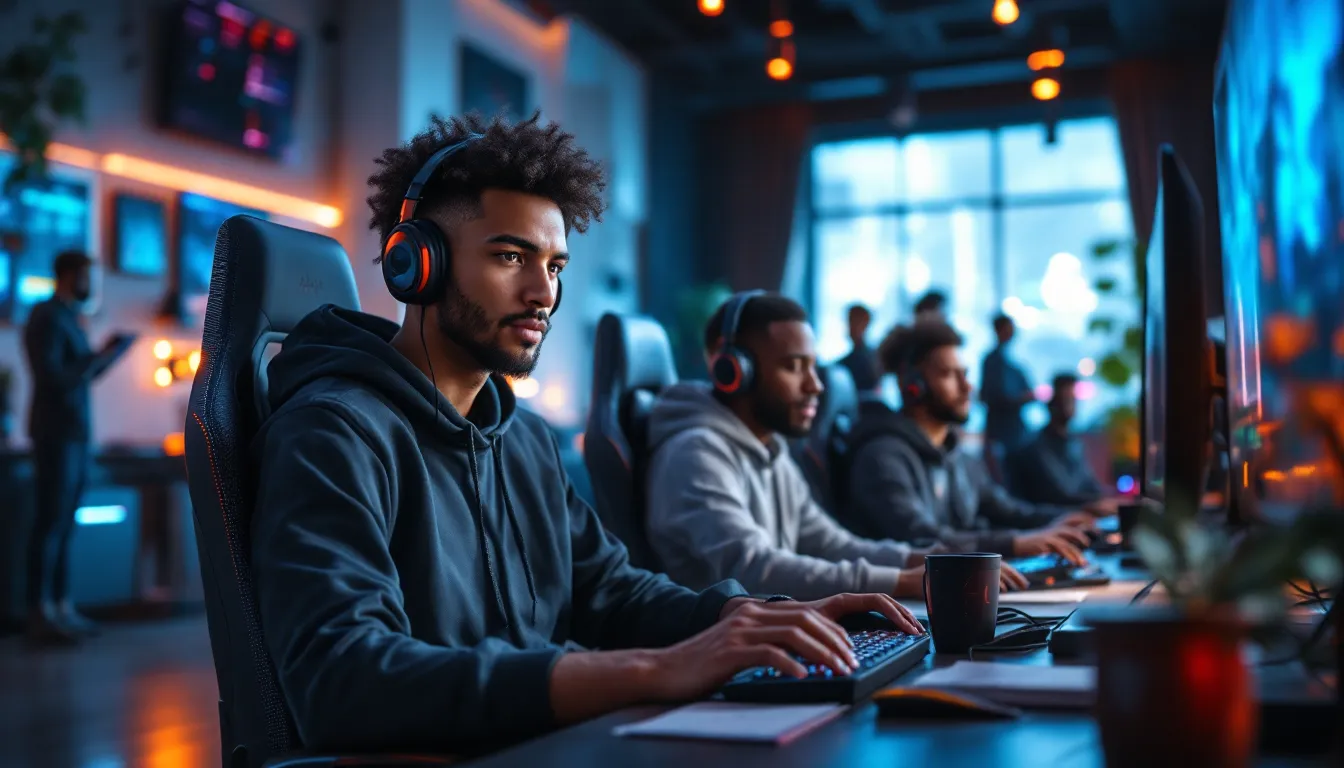
Community culture matters as much as hardware. Some venues attract hardcore competitive players. Others are more casual. Visit and vibe-check. Are people helpful to newcomers? Is there a toxic element? Do organizers run consistent events or is it ad-hoc? Talk to regulars, they’ll give you the real story.
Venue amenities affect your stay. Does it have decent food options, or do you bring your own? Is there seating variety (gaming chairs versus lounge areas)? How’s the ventilation and lighting? You’re potentially spending 8+ hours there. Details matter.
Tournament infrastructure varies. Some venues are just open-play spaces. Others host regular tournaments with brackets, referees, and proper prize handling. If competitive play is your goal, prioritize venues with established tournament schedules.
Price structure should be transparent. Most charge hourly ($4–$10/hour depending on region and equipment tier). Some have membership options offering discounts. Compare cost per month if you’re a regular.
Check online reviews before visiting. Look for patterns, consistent praise about staff and hardware is a good sign. Single negative reviews happen: repeated complaints about rigs breaking or staff being dismissive are red flags.
Setting Up Your Own Local Gaming Group
If no venue exists or they don’t vibe with your scene, starting your own group is realistic.
Start small and intentional. Invite 3–5 people you know who play Battlefield seriously. Set a regular time, say, every Thursday at 7 PM. Consistency matters more than size early on. You’re building a habit, not throwing a party.
Pick a location. Someone’s gaming PC, a friend’s dorm, a public space like a library meeting room (less common but possible). You’re not trying to rival LAN centers, you’re creating structure around casual play.
Create a Discord server. It costs nothing and becomes your communication hub. Use it for scheduling, sharing loadout tips, coordinating scrims, and building identity. A good server grows organically because people use it.
Experience from gaming guides on competitive loadouts shows that organized teams improve faster because they’re intentional about preparation. Apply that to your local group.
Run friendly competitions early. Organize 5v5 scrimmages against other local groups or run mini tournaments with bragging rights as the prize. Competition drives engagement without needing a big prize pool.
Grow deliberately. Once the core crew is solid, invite trusted players. Bad actors kill group chemistry. Vet people before bringing them in. A crew of 8–12 regulars beats a loose group of 50.
Eventually, if you’re organized enough, you can enter local tournaments as a team. That’s the natural progression, internal scrims, then local competition, then regional brackets. Don’t skip steps.
The key is treating it like an actual team, not just friends playing games. Structure, communication, consistency, these create group identity and keep people invested.
Connecting With Battlefield Players Through Discord and Social Networks
Best Discord Servers for Regional Battlefield Communities
Discord is where local gaming culture actually lives. Here’s how to find and evaluate servers:
Search strategy matters. Go to Discord’s server discovery, filter by gaming/esports, then search your city name. Join 3–5 servers and lurk for a week before deciding where to invest time. Server quality varies wildly. A server with 500 members and 2 active players is different from one with 200 members and constant conversation.
Red flags: Servers with no moderation (spam dominates), unclear tournament rules, or inactive leadership. These tend to die or become toxic.
Green flags: Clear channel organization (separate channels for recruitment, tournament info, strategy discussion), active moderators, regular events, and a welcoming atmosphere for beginners.
Major region-agnostic servers that run regional channels include r/Battlefield’s official Discord and servers tied to esports organizations like ESL or BLAST (if they’re organizing Battlefield tournaments in your region).
Niche is often better. A 50-person local hardcore server where everyone knows each other beats a 5,000-member general Battlefield server. You’re looking for depth, not size. Find your people.
Create your own Discord if existing ones aren’t meeting your needs. It’s easy and free. Name it clearly ([City] Battlefield Competitive or similar), set up basic channels (announcements, strategy, recruitment, off-topic), and share the invite link on Reddit, Twitter, and local Facebook groups. Growth happens organically if your group is active.
Use Discord for more than socializing. Set up a bot to handle tournament brackets (Challonge integration works well), schedule reminders for events, and pin important info (tournament links, venue details, meta guides). Organization separates serious communities from hangouts.
Leveraging Social Media To Build Local Connections
Twitter/X remains the esports hub. Follow local esports orgs, tournament organizers, and players in your region. Retweet tournament announcements, engage with content, and gradually build visibility. If you’re running a team, consistent tweets about scrims and tournament results get noticed. You don’t need massive followers, 100 engaged people matter more than 1,000 ghosts.
TikTok clips work if you’re streaming or creating content. Short Battlefield clips (a clutch 1v5, a highlight play, funny moments) perform well if your area’s gaming culture is active there. It’s younger but growing as a recruitment tool.
Instagram has gaming pockets. Gaming accounts share clips and community photos. Not essential, but it’s a way to document your group’s moments.
Facebook groups remain crucial for local organizing. While older as a platform, Facebook groups tied to your city or region have actual people using them daily. Event organizers still post there. Don’t sleep on it.
YouTube for longer content. If members of your group stream tournaments or create guides, YouTube’s algorithm eventually surfaces local gaming content to nearby viewers. It’s a longer play but builds community presence.
Reddit for raw connectivity. Post in regional subreddits and r/Battlefield with genuine info about local events or recruiting. Reddit users respect transparency and actual value. No spam allowed, but legitimate tournament announcements get upvoted.
The pattern: Use multiple platforms, but prioritize the ones your specific community actually uses. A thriving Discord beats sporadic Twitter posts. Consistent local Facebook group activity beats generic YouTube uploads. Know where your people are, then be present.
Tips for Getting the Most Out of Local Battlefield Gaming
Skill Development Through Community Play
Playing locally accelerates improvement because the feedback loop is tighter. Online ranked matches feel anonymous: local play gets personal. Someone beats you with a PKP-BP setup, they’ll explain their positioning next time you see them. That’s knowledge transfer ranked can’t replicate.
Scrim structure matters. Casual 5v5s are fun but less efficient. Structured scrims with rules, map rotations, and role assignment (entry fragger, support, lurker, etc.) mimic competitive formats. Teams that practice this way perform noticeably better in tournaments. If your group isn’t doing structured scrims, start now.
VOD review with teammates works. Record your scrims and watch them together. Discuss mistakes without ego. Where did rotations break? Why did mid control flip? This is how pros practice and it’s why they’re pros. Even casual groups benefit from 15 minutes of post-game review.
Loadout experimentation is safer locally. Test that new XM4 build against your crew before taking it to a tournament. Get real feedback fast instead of finding out mid-match that your setup’s suboptimal. Your teammates will tell you the truth.
Mentorship accelerates learning. If your group has experienced competitive players, they should share knowledge intentionally. Not tutorials, but honest feedback during and after matches. “Watch that angle more” or “you’re peeking too wide” builds habits faster than grinding solo.
Meta awareness comes from your community. Someone in your group is probably following Dexerto or other esports guides tracking Battlefield patch notes and pro loadout trends. They’ll share findings. You collectively stay current on balance changes and viable strategies.
Track individual and team stats. Know your K/D, damage per round, kill participation percentage. Know your team’s win rate on specific maps. Data drives conversations about what’s working. Gut feelings are less useful than patterns.
Networking and Making Friends in Gaming Circles
This isn’t about using people: it’s about genuine connection. Gaming communities are tight because shared passion creates real bonds.
Be reliable. Show up on time, prepared, and ready to play. People remember teammates who consistently deliver. Flakes get dropped. If you commit to Thursday nights, make Thursday nights work.
Be coachable. When someone offers feedback, don’t get defensive. It’s a sign they think you’re worth investing in. Respond positively and show you implemented the advice next session. Growth mindset separates people who stay connected from those who drift.
Contribute beyond your skill level. If you’re new, bring food or run the Discord. If you’re skilled, mentor newer players. Communities sustain when everyone adds value somehow. The best-connected people aren’t always the best players, they’re the ones who keep things organized and positive.
Expand beyond your immediate crew. Go to tournaments and talk to teams from other regions. Attend venue events even when your group isn’t playing. Gaming industry is smaller than you think, friendships and collaborations emerge from these interactions. Polygon covers gaming culture extensively: reading about gaming communities helps you understand the broader scene.
Stay involved during off-seasons. If tournaments pause seasonally, your group shouldn’t disappear. Keep scrimmaging, keep Discord active. The groups that maintain momentum between seasons are the ones that perform better when competition returns.
Celebrate wins together and handle losses together. This builds actual camaraderie. Tournament placement doesn’t matter as much as the experience of grinding toward goals with people you care about.
Don’t oversell the esports angle if it’s not everyone’s goal. Some people in your crew will want competitive paths: others just want consistent good teammates. That’s fine. A group can accommodate both if you’re intentional about it.
Conclusion
Finding your local Battlefield community is one of the highest-impact decisions you can make as a gamer. Whether you’re chasing competitive viability, genuinely better teammates, or just a consistent crew to grind with, the infrastructure exists now. Communities thrive in most major metros, and even smaller areas have Discord groups and informal meetups.
Start with whatever’s closest: a venue, a Discord server, a Facebook group, a nearby tournament. Attend one event or join one server this week. You don’t need to commit immediately, just show up and see if it clicks. Good communities have space for newcomers because they remember when they were new.
The difference between playing Battlefield solo and being part of an organized local scene compounds fast. Better skills, real friendships, tournament opportunities, and the simple satisfaction of being part of something, all of it flows from taking that first step to connect. Your next gaming crew is out there right now, probably looking for you just like you’re looking for them.


