Table of Contents
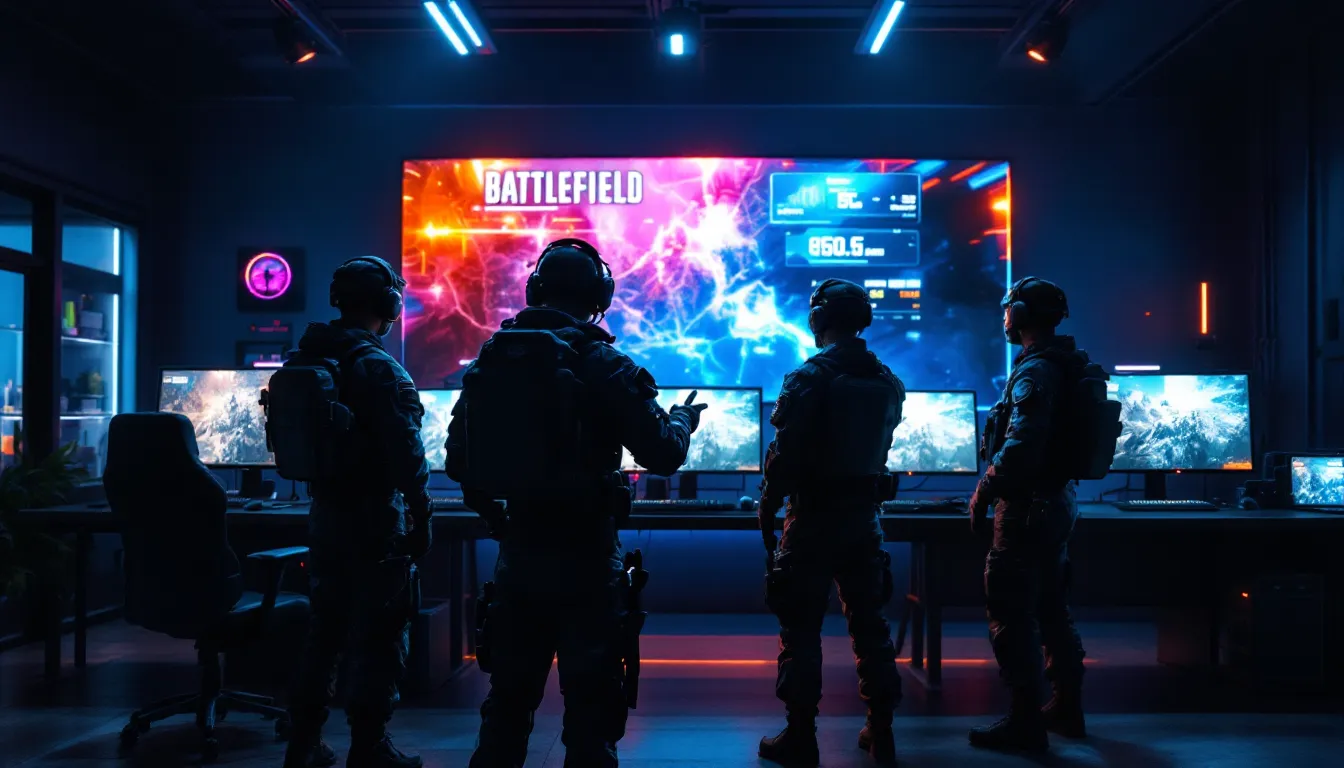
ToggleSquad-based shooters live and die by one currency: trust. In Battlefield, you’re not a lone operator. You’re part of a four-person unit that moves, communicates, and survives together. Without trust, even skilled players fall apart when bullets start flying. You’ll see squads where individuals play around each other instead of with each other, where callouts go unheard, and where one player’s mistake cascades into a lost objective. But when trust is built right? That’s when everything clicks. Players predict each other’s movements, hold positions without doubt, and turn around fights that should’ve been losses. This guide breaks down how to establish battlefield trust from the ground up, because winning isn’t just about mechanics or map knowledge. It’s about knowing your squad will be there when it matters most.
Key Takeaways
- Battlefield trust is earned confidence that teammates will execute their role, communicate clearly, and prioritize squad objectives—it’s the foundation that converts raw mechanical skill into competitive wins.
- Effective communication infrastructure (unified voice platform, standardized callout formats, and mic discipline) is essential; establish baseline expectations like compass-direction callouts and confirmation protocols before each match.
- Consistent role assignments and predictable positioning patterns reduce decision fatigue and let teammates anticipate each other’s movements, eliminating callout delays and improving squad cohesion.
- Squads that develop 2-3 core strategies per map and mode and run them for 5-10 matches outperform those with improvised tactics; consistency builds muscle memory and automatic execution.
- Address performance mistakes immediately after matches with specific examples and context, focusing on process improvement rather than judgment—this transforms errors into trust-building dialogue.
- Individual mechanical skill development specific to your role (DM practice for Assault, ability timing for Support, callout accuracy for Recon) directly increases your trustworthiness and squad reliability.
What Is Battlefield Trust and Why It Matters
The Foundation of Squad-Based Gameplay
Battlefield trust isn’t mystical. It’s earned confidence that your teammates will execute their role, communicate clearly, and make decisions that benefit the squad over individual stats. In practice, this means knowing your Assault player will drop ammo when needed, your Support will revive downed teammates, and your Recon will call out enemy positions instead of chasing kills on the opposite side of the map.
The squad system in modern Battlefield (particularly 2042 and beyond) is built around specializations that force interdependence. You literally can’t win extended engagements without teammates doing their job. A solo player doesn’t revive themselves. A squad low on ammo can’t hold a strong position for long. This isn’t a weakness, it’s the entire foundation of the game’s design.
Trust accelerates decision-making. When you believe a teammate will hold a flank, you don’t spend mental energy double-checking. You focus on the engagement in front of you. When callouts are consistent and accurate, you don’t waste time verifying intel. You react and move. This mental clarity, repeated across four players, compounds into faster rotations, tighter positioning, and higher kill efficiency.
How Trust Impacts Win Rates and Competitive Performance
The data backs this up. Squads that play together regularly and maintain high internal trust show measurably better outcomes. They sustain longer hold times on objectives, lose fewer members to isolated engagements, and convert team fights at significantly higher rates. In competitive Battlefield, especially in matches where teams are mechanically similar, the deciding factor is often coordination and trust.
Specific example: A Breakthrough mode attack phase. Your squad is pushing toward an objective defended by a competent enemy team with equal firepower. The difference between success and failure often comes down to trust in the plan. Does your squad believe the Recon player has true sight on enemy positions? Will your Engineer trust the timing and not overextend? These questions resolve instantly in squads with built trust. In squads without it, you get fragmented pushes, poor coordinate timings, and preventable deaths.
Win rate improvements are real. Competitive squads that establish trust protocols often see 10-15% improvements in match win rate within a season, according to esports performance analytics. The mechanical skill floor rises, but trust acts as a multiplier on top of that foundation. It’s why you’ll see teams with middle-tier aim beat mechanically superior players: their trust and coordination absorb potential advantages.
Communication: The Backbone of Trust in Battlefield
Setting Up Effective Voice Chat and Callouts
You can’t build trust without communication infrastructure. First, ensure everyone in the squad is on the same voice platform and can hear each other clearly. PC players, console players, and cross-play squads need unified comms, use Discord, console party systems, or in-game voice, but pick one and stick with it. Audio quality matters: if your squadmate’s mic sounds like a robot underwater, callouts become useless and friction builds quickly.
Before jumping into a match, establish baseline expectations:
- Push-to-talk vs. open mic? Open mic is fine for casual squads but creates noise. Push-to-talk forces discipline and keeps comms clean.
- Call format. Does “enemy left” mean left from the speaker’s perspective or the listener’s? This confusion kills squad decisions. Use compass directions or landmarks instead: “Contact north of garage.”
- Mic discipline. During tense moments, people talk too much. Agree that only callout-relevant info gets spoken during firefights.
- Confirmation protocol. When someone calls a rotation, does the squad need to acknowledge it? In competitive play, yes. Casual play can be looser, but clarity still matters.
The microphone itself is part of trust-building. If three squad members have clear audio and one sounds muffled, that player immediately becomes less trusted, not because they’re less skilled, but because information from them is harder to parse. Budget a decent USB mic or headset. It’s not expensive relative to the game itself, and it directly impacts squad cohesion.
Developing a Team Callout System
Every squad needs a shared language. This doesn’t mean complex military jargon. It means consistency. Your Assault says “enemy spawning behind,” not “they’re coming from the back.” Your Support says “contact north windows,” not “I see guys upstairs.” Over time, these short, specific callouts become automatic and immediate.
Map-specific landmarks matter. Pick clear reference points on every map: “garage,” “bridge,” “main,” “fountain,” “top stairs.” Write them down in a document if you’re a competitive squad. When an enemy is spotted near a landmark, you don’t say “near the building”, you name the landmark. This removes ambiguity. Everyone’s mental map aligns instantly.
Tier 1 squads use radial callouts: north, south, east, west. They specify distances when relevant (“enemy north, two-hundred meters”). They call out enemy count and loadouts when observable (“three enemies north, two assault, one with sniper”). This level of detail requires practice but becomes second nature in 10-15 matches together.
Develop shorthand for common situations. “Push” means move aggressively. “Hold” means maintain position, don’t advance. “Fall back” means retreat and regroup. “Ping” means use the squad ping system to mark threats. When crisis moments hit, these short commands execute faster than full sentences. Trust means trusting that “hold north” will be obeyed because everyone practiced the term until it was instinct.
Role Clarity and Positioning Confidence
Assigning Roles That Play to Team Strengths
Battlefield’s specialist system means role assignment is flexible but critical. You don’t just need four players, you need four players whose specialization choice aligns with their playstyle and the squad’s needs. Assigning your best mechanical player to Recon when they’re most comfortable with aggressive Assault tactics creates internal friction. They’ll perform below their ceiling, resent the assignment, and trust erodes before the match starts.
Instead, talk through strengths before matchmaking:
- Who has the fastest reaction time? Probably your primary fragger, put them on Assault where raw gunplay wins duels.
- Who’s most patient and map-aware? Your Recon or Support player. They thrive when holding angles and calling rotations.
- Who has strong game sense but maybe not elite aim? Support or Specialist roles. Their value comes from positioning and utility, not kills.
- Who can track multiple threats? Another trait that favors Support and defensive specialists.
Once roles are assigned, they should remain consistent across sessions. Switching every match creates uncertainty. Your Recon needs to develop tendencies and positioning in a given map so teammates predict where they’ll be. If they swap every match, that trust breaks.
In Breakthrough and Conquest modes, role consistency lets your squad develop shared strategies. Your Engineer knows the squad’s demolition timings. Your Assault knows when support expects covering fire. This predictability is the entire foundation of trust.
Building Predictable Positioning Patterns
Trust in positioning comes from repetition. Your Recon always takes high ground on the map’s eastern route. Your Support sits mid-range with ammo boxes. Your Assault pushes forward aggressively but checks for exits. Your fourth player adapts based on enemy positioning but generally holds a secondary angle.
This isn’t rigid, adapt to enemy presence, but your default patterns become predictable to teammates. When your Assault pushes forward, your Support instinctively covers that push because they know it’s coming. When enemy pressure shifts, your Recon naturally rotates because the position becomes untenable and teammates expect that rotation.
Practice positioning patterns in 2-3 matches per session before jumping into ranked or competitive play. Run the same map multiple times. Your squad will naturally fall into optimal positioning and teammates will internalize each other’s likely movements. This eliminates callout delays and confusion.
In the 2026 Battlefield meta (especially in modes like Rush), predictable positioning prevents your squad from being caught scattered. When one player rotates, the others don’t have to frantically reposition, they already know where their teammates are likely to move. This cohesion, when practiced, becomes almost mechanical.
Consistency and Reliability in Teammate Behavior
Developing Repeatable Strategies and Tactics
Trust thrives on consistency. If your squad has a strategy for holding an objective in Breakthrough, running it the same way each round builds muscle memory and confidence. The plan becomes predictable, not to enemies, but internally. Everyone knows what to expect.
Develop 2-3 core strategies per mode and per map:
- Objective hold strategy: How do you defend a point? Where do each role position? Who covers flanks? How do you prevent third-party attacks?
- Aggressive rotation strategy: When does your squad push for kills vs. defend? What triggers an aggressive rotation?
- Emergency fall-back protocol: When engagement becomes untenable, what’s the default retreat route? Where do you regroup?
Run these strategies for 5-10 matches until they’re automatic. Your squad will develop subtle improvements through repetition, better timings, more efficient rotations, faster callouts. Each iteration strengthens trust because everyone literally knows what’s coming next.
Data from esports teams shows that squads running 2-3 set strategies outperform squads with 10+ improvised tactics. Consistency beats flexibility in trust-building. You can deviate when needed, but having a default framework reduces decision fatigue and increases confidence.
Learning Your Squad’s Strengths and Weaknesses
After 20-30 matches together, you’ll know your squad’s actual performance profile. Maybe your Assault is lethal in close quarters but struggles with mid-range engagements. Maybe your Support excels at sustaining defensive holds but panics under aggressive pressure. Maybe your Recon is brilliant at intel gathering but underperforms in direct combat.
Trust includes accepting these realities. You’re not misjudging teammates, you’re optimizing around actual performance data. If your Recon struggles in CQB, don’t assign them defensive positions near tight corridors. If your Assault dominates close quarters, design strategies that funnel enemies into those engagements.
This is where trust becomes powerful. Instead of judging teammates for weakness, you design the squad’s gameplay around strength exploitation. It’s a team optimization problem, not a character flaw. Communicating this reframing is critical, “We’re positioning you here because you’re best at this, not because you can’t do other things” is trust-building language.
Track basic stats across 10-20 matches: average kills per game, revive rate, ability usage, objective time. Not for judgment, for pattern recognition. Over time, you’ll know exactly what each player is reliable at and what pushes them outside their comfort zone.
Earning Trust Through Skill Development
Improving Individual Mechanics for Team Reliability
You can’t ask teammates to trust you if you’re actively holding them back. Trust is partially earned by being individually competent. This doesn’t mean everyone needs 2.0 K/D ratios, it means playing your role well enough that teammates don’t have to compensate for your mistakes.
If you’re the squad’s Support player, your job is ammo supply and revives. If you’re terrible at tracking teammates or forget to place ammo boxes, you’re directly undermining trust. If you’re Assault, your job is aggressive positioning and damage. If you get flanked repeatedly or whiff easy kills, your squad suffers and your trustworthiness erodes.
Commit to mechanical improvement specific to your role:
- Assault players: Practice TTK (time-to-kill) on medium-range engagements. Run DM modes for 20 minutes before squad sessions. Learn AR spray patterns and headshot timing.
- Support players: Practice ability timing and positioning. Ensure ammo boxes are placed where teammates actually stand, not at random spots. Learn revive timing, reviving mid-engagement vs. reviving after securing the area makes a huge difference.
- Recon players: Practice callout accuracy. Your intel is only valuable if it’s precise. Develop snap-aim reflexes for defensive moments. You can’t be a liability in firefights.
- Engineer/Specialist: Whatever your role, nail ability cooldown management and positioning discipline.
Even 15 minutes of focused practice before squad sessions compounds. Over a month, that’s 6+ hours of intentional skill development. Your squad will notice the improvement and trust you more because you’re demonstrating commitment.
Personal discipline matters too. Show up on time for squad sessions. Use your mic even when tired. Execute strategies instead of freelancing. Small behavioral commitments build trust faster than mechanical skill sometimes.
Map Knowledge and Rotational Awareness
One of the highest-trust indicators is map knowledge. A squadmate who knows every flank route, every sightline, and every rotation creates confidence in callouts and positioning. You trust their intel because they’re clearly intimately familiar with the map.
Spend 2-3 matches per season learning a map thoroughly. Run solo, walk every possible route, identify landmarks, note enemy common positions, understand vertical space (roofs, underground areas, upper floors). When you rejoin squad play, your callouts become more specific and your rotations more efficient.
Rotational awareness is the practical application. When your squad gets pressured, you need to know three exit routes and which is safest given enemy deployment. A player who always chooses the best rotation reinforces trust, teammates learn they can follow you because you make good decisions under pressure. A player who always leads toward enemy spawns or dead-end positions breaks trust quickly.
Rotation vocabulary helps too. Define map sections clearly (“eastern rotation,” “northern corridor,” “underground passage”). When engagements break down, calling out a specific rotation route lets teammates follow immediately without confusion. Experienced squads can execute rotations in 3-5 seconds because everyone knows the terminology and the map equally well.
Competitive teams often run 1-2 map focus seasons. Instead of trying to master 10 maps, they master 3-4 thoroughly. This specialization builds crushing confidence on known maps because rotational awareness is perfect. You’re not guessing, you’re executing practiced rotations.
Handling Conflict and Rebuilding Trust After Mistakes
Addressing Performance Issues Constructively
Eventually, someone drops the ball. Your Support forgets to revive. Your Recon misses a critical callout. Your Assault gets reckless and dies pushing solo. Trust doesn’t mean ignoring these mistakes, it means addressing them without poisoning the squad’s dynamic.
The rule: Address issues immediately after the match, not during it. Mid-match callouts are for tactical info only. Judgment and critique happen in post-match debrief when emotions aren’t running hot and you can have a real conversation.
When you do address performance issues, use specific examples: “That last Breakthrough round, you didn’t revive me after I went down behind the wall. I was close to the objective and that would’ve changed the fight.” Not: “You never revive.” Specificity transforms feedback from judgment into dialogue.
Invite explanation. Maybe your Support didn’t realize you were in revive range. Maybe they were pinned and couldn’t reach you safely. Understanding context prevents resentment. You asked for revive context, got a valid reason, and learned something about their decision-making. Trust actually increases because you now understand their constraints.
Then agree on future handling: “Next time, if you can’t safely revive, call it out immediately so I know to play differently.” This turns the mistake into a process improvement. The squad gets stronger because a gap was identified and closed.
This approach works for strategy mistakes too. Your squad tried a rotation that failed. Instead of “That was dumb,” ask: “What was your read on enemy positioning when you chose that route?” Often you’ll find they had partial info or made a calculated call that didn’t pan out. Learning their decision-making process prevents repeated mistakes and builds trust through understanding.
Moving Forward From Costly Errors
Sometimes mistakes cost matches. You push too aggressively and get wiped. Your callout was wrong and enemies exploited it. Someone’s mechanical whiff on a critical duel cost the round. These moments are trust killers if handled wrong. They become trust builders if handled right.
First: Accept that costly errors are normal at every skill level. Even pro players make them. The difference is recovery speed. Squads that rebuild trust quickly after errors improve faster than squads that hold grudges.
Carry out a simple rule: Acknowledge the mistake, note what would’ve been better, move to the next round. “Yeah, I pushed too hard. Should’ve waited for support.” Done. You’re moving forward, not dwelling. Your squad learns that mistakes aren’t personal attacks, they’re data points for improvement.
For recurring errors (same rotation mistake twice, same callout confusion three times), treat it as a squad-level process issue, not an individual failure. “We’re getting confused on this rotation. Let’s clarify the route.” This reframes the problem as a team communication gap, not individual incompetence. Trust recovers because the squad is collectively fixing the issue.
In competitive play, especially in high-pressure matches, trust is tested hardest. A squad that can execute cleanly during casual play might fall apart when stakes are real. Squads with proven trust actually perform better under pressure because there’s no doubt, everyone’s focused on execution, not worrying if teammates will show up. That confidence is priceless in close matches.
Long-term trust relationships survive mistakes because there’s historical context. You know this player’s skill and reliability across dozens of matches. One error doesn’t overwrite that. New squads haven’t built that buffer, so early mistakes hit harder. This is why grinding matches together, even casual ones, builds trust faster than jumping straight into ranked play.
Conclusion
Building battlefield trust isn’t a single tactic or setting. It’s a cultural practice within your squad that compounds over time. You start with communication infrastructure and clear role assignments. You develop consistency through repeated strategies and map knowledge. You earn credibility through individual skill and commitment. You handle mistakes with maturity and focus on improvement. After 30-50 matches of intentional trust-building, you’ll feel the difference. Your rotations tighten. Your engagements become more coordinated. Your win rate climbs. Most importantly, playing becomes more enjoyable because you’re not managing doubt, you’re executing as a unit.
The technical side of Battlefield, gunplay, positioning, meta weapons, matters. But trust is the multiplier that converts raw skill into results. Two squads with equal mechanical ability will see dramatically different outcomes if one has trust and the other doesn’t. Invest in building it. The payoff is immediate and measurable. Your squad will be stronger, your matches will be closer, and the game will be more rewarding. That’s what Battlefield Trust really delivers: confidence that when bullets start flying, your squad will be there.
If you’re looking to dive deeper into the Battlefield franchise’s evolution and understand how squad-based gameplay became central to the series, exploring Battlefield Game List: Discover provides context on how the game has emphasized teamwork across titles. Or, for historical perspective on how squad dynamics emerged in the franchise’s early days, the Battlefield First Game: How article breaks down where it all started. Whether you’re jumping into the latest season or revisiting classic entries, trust remains the foundation that separates forgettable matches from legendary ones.


