
Table of Contents
ToggleCulloden Battlefield stands as one of Scotland’s most historically charged landscapes, a windswept moorland where the clash between the Highland clans and British forces on April 16, 1746 fundamentally altered the course of Scottish history. For photographers, historians, and curious travelers, culloden battlefield photos capture more than just scenic vistas, they’re windows into a pivotal moment that reshaped Britain’s cultural and political fabric. The landscape itself tells a story through its raw, dramatic terrain, and modern photography has become a powerful medium for preserving and interpreting this legacy. Whether you’re drawn to the stark beauty of the moors, the detailed monuments scattered across the field, or the deeper historical narratives embedded in every corner, understanding how to see and document Culloden transforms a simple visit into a profound historical exploration.
Key Takeaways
- Culloden Battlefield, site of the 1746 battle that ended the Highland clan system, offers photographers iconic subjects including the Highland Memorial Cairn, clan stones, and moorland vistas that capture centuries of Scottish history.
- Culloden battlefield photos are most compelling during golden hour (early morning and late afternoon), with seasonal variations—spring blossoms offer resonance, summer brings purple heather, autumn provides dramatic light, and winter creates austere emotional landscapes.
- Key photography locations include the visitor center approach for wide-angle moorland shots, the central Highland Memorial Cairn for compositional anchors, clan stone details for genealogical documentation, and artillery positions that reveal tactical perspectives.
- Successful culloden battlefield photos require weatherproof equipment, tripod stabilization against Highland wind, multiple lenses (wide-angle for landscape, telephoto for detail), and 3-4 hours minimum for thorough site exploration.
- Culloden battlefield photos serve critical preservation functions beyond aesthetics—high-resolution documentation of monument inscriptions supports genealogical research, creates conservation baselines, and contributes to crowdsourced heritage archives accessible worldwide.
- Photographing Culloden transforms passive tourism into active historical engagement, helping contemporary audiences understand how the 1746 battle fundamentally reshaped Scottish culture, Highland society, and British politics.
Understanding The Culloden Battlefield
Historical Significance And Context
Culloden Battlefield represents the final major clash of the Highland clan system against centralized British authority. The moorland, located near Inverness in the Scottish Highlands, sits at the intersection of feudal tradition and emerging modern statecraft. For nearly three centuries before the battle, the Highlands operated under a distinct social structure, with powerful clan chiefs commanding loyalty and wielding significant military power. The broader context involves the Jacobite cause, multiple attempts to restore the Stuart dynasty to the British throne, and the deep religious and political divisions that plagued 17th and 18th century Britain.
The 1746 confrontation wasn’t merely a military skirmish: it marked the beginning of the Highland Clearances and the systematic dismantling of traditional Highland society. The aftermath brought laws banning traditional Highland dress, the wearing of tartans, and even the playing of bagpipes in some regions. These sweeping cultural suppressions fundamentally altered Scotland’s demographic and social landscape for generations. Today, photographs of Culloden carry weight beyond their visual composition, they document a site where indigenous Highland culture faced near-extinction.
The Battle Of Culloden: Key Events And Timeline
The Battle of Culloden unfolded over a single, brutal afternoon in April 1746. Charles Edward Stuart, the Young Pretender, led approximately 5,000 Highland warriors against roughly 9,000 British government troops commanded by the Duke of Cumberland. The Highland forces launched repeated charges across open moorland, where they faced disciplined musket fire, artillery, and cavalry tactics that their traditional weaponry and tactics couldn’t overcome.
Key timeline elements:
- Early morning (April 16, 1746): Jacobite forces begin their advance across the battlefield around dawn. The Highland army is exhausted, having marched overnight from their camp.
- Mid-morning: British artillery opens fire, creating devastating casualties among the closely-packed Highland regiments. The Highland charge begins, but lacks the coordination and momentum of earlier battles.
- Late morning (around 11 AM): The battle reaches its climax. British dragoons wheel around the Highland flank while disciplined infantry hold their lines.
- Within two hours: The Highland charge breaks. The Jacobite army collapses into rout, with survivors fleeing across the moorland.
- Aftermath: Pursuit continues for weeks. Survivors face capture, execution, or flight to America and France. Over 1,500 Jacobite casualties are counted on the battlefield itself.
The battle lasted roughly two hours but shaped Highland history for the next 150 years. Photographs of Culloden today often highlight the memorial cairns, clan stones, and monuments that mark where specific regiments fought and fell. These visual markers help modern visitors understand the spatial dimensions of a battle that seemed to unfold in mere minutes but carried consequences lasting centuries.
Photography At Culloden Today
Best Locations For Capturing Culloden’s Landscape
The Culloden Battlefield visitor experience spans roughly 20 acres of actively maintained moorland, with multiple vantage points offering distinct photographic opportunities. Understanding where to position yourself makes the difference between snapshot-quality images and visually compelling documentation.
Key locations for culloden battlefield photos:
- The Visitor Centre approach: The path leading from the car park toward the main visitor building offers wide-angle perspectives of the open moorland. Early morning light transforms this approach into striking landscape photography territory, with long shadows accentuating the terrain’s undulations.
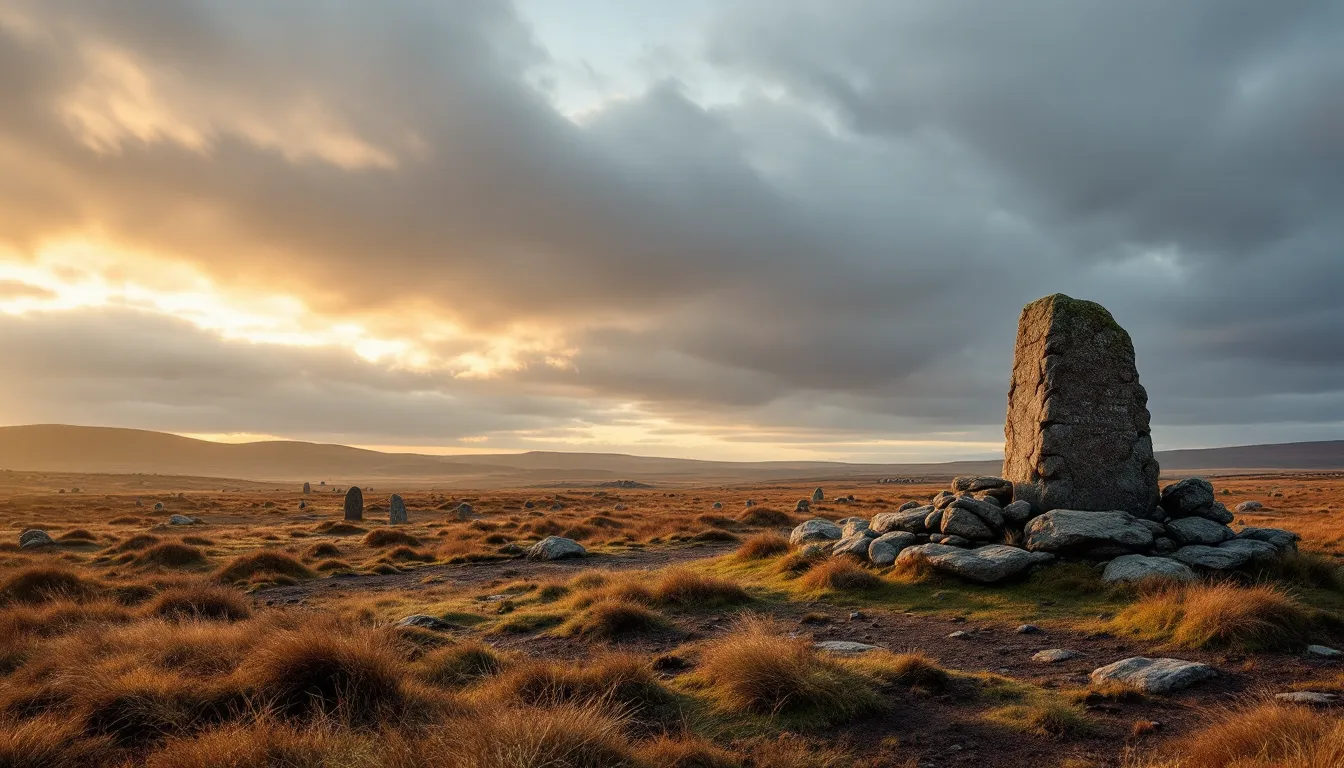
- The main stone cairn: The central Highland Memorial Cairn, erected in 1881, provides a strong compositional anchor. Positioning shots with the cairn against expansive sky creates powerful focal points. The cairn’s base is surrounded by smaller clan stones, each weathered and inscribed, offering detail-oriented photography opportunities.
- The flanking monuments: Positioned around the perimeter are clan stones, regimental markers, and the Graves of the Clans, communal burial sites where fallen Highland warriors were interred. Each carries distinct visual character and historical weight.
- The artillery positions: Marked areas indicate where British cannons were stationed. Standing at these vantage points and photographing back toward the Highland charge route conveys tactical perspective and helps viewers understand why the open moorland became a killing field.
- The Well of the Dead: A small stone-marked spring near the visitor centre serves as a poignant documentation subject, associated with the desperate search for water after the battle.
Each location requires different approaches. Wide landscapes demand attention to sky composition and horizon placement. Monument photography benefits from closer framing, texture capture of weathered stone, and consideration of shadow patterns that reveal inscriptions. The moorland’s rolling nature means elevation changes, shooting from slightly elevated positions can reveal spatial relationships that ground-level photography misses.
Seasonal Changes And Lighting Conditions
Culloden’s appearance transforms dramatically across seasons, fundamentally altering how culloden battlefield photos register visually and emotionally. Scottish moorland changes character with remarkable speed, and understanding these seasonal shifts helps photographers plan visits strategically.
Spring (March-May): After winter’s dormancy, the moorland begins greening, though the landscape remains spare and uncluttered. April, when the battle occurred, holds particular significance, visiting during the anniversary period carries emotional resonance. Light becomes increasingly golden during late spring evenings, extending photography windows. But, Scottish weather remains unpredictable, with frequent cloud cover and sudden rain showers. Spring’s longer daylight hours (sunset around 9 PM by late May) allow extended golden-hour photography.
Summer (June-August): The moorland achieves full green growth, and heather begins blooming from late July onward. Purple heather against grey stone monuments creates striking chromatic combinations. Cloud cover can be persistent, flattening light and creating moody, atmospheric images. Summer brings the midnight sun phenomenon, sunset occurs very late, and twilight extends the blue hour significantly. Conversely, the ground becomes wetter after rain, and midges (small biting insects) peak during July-August, affecting photographer comfort.
Autumn (September-November): Heather blooms continue through September, then fade. Vegetation gradually browns and dies back, restoring the moorland’s sparse character. Autumn light becomes increasingly slanted, with shorter days (sunset around 3:30 PM by November) intensifying shadows and creating dramatic atmospheric conditions. Autumn often brings the clearest skies and most stable weather patterns, ideal for detail photography and monument documentation.
Winter (December-February): The moorland becomes stripped and austere, with exposed peat, grass, and rock. Overcast conditions dominate, creating uniform grey lighting that some photographers find emotionally resonant, bleak and reflective, matching the historical tragedy. Snow is rare but transforms the landscape when it appears. Winter daylight is extremely limited (sunset around 3:15 PM), constraining photography windows. But, the sparse vegetation means unobstructed views and minimal distracting elements.
Golden hour considerations: The best light for culloden battlefield photos typically arrives in early morning (30 minutes after sunrise) and late afternoon/evening (2-3 hours before sunset). Scottish latitudes mean summer golden hours extend significantly, while winter golden light is compressed into narrow windows. Cloud cover, frustratingly common in Scotland, can actually enhance atmospheric photography, diffused light eliminates harsh shadows on monuments and creates even exposure across varied terrain elevations.
Notable Culloden Battlefield Photos And Their Stories
Iconic Images That Define The Battlefield
Certain photographs of Culloden have achieved iconic status, circulating through historical publications, documentaries, and heritage websites. These images share common elements: they capture the moorland’s emotional weight, highlight the memorial infrastructure, and convey the spatial vastness of the battlefield.
The most recognizable culloden battlefield photos typically feature the Highland Memorial Cairn as a central subject, often photographed with dramatic sky conditions, storm clouds gathering, or rare sunshine breaking through Highland gloom. Photographer Nigel and Ruth Fenwick’s work, featured in various Scottish heritage publications, exemplifies this approach: their images emphasize the cairn’s solitary presence against expansive sky, reinforcing themes of loss and endurance. These photographs resonate because they’re simultaneously beautiful and melancholic, there’s nothing sensationalized about them, just honest documentation of how the memorial sits within its landscape.
Another prominent category involves clan stone photography. Individual stones, each inscribed with a clan name and casualty numbers, are documented in close-up detail. These images serve dual purposes: they’re historically valuable records of the inscriptions (important for genealogical research), and they’re visually striking, weathered stone texture against moorland background creates compelling contrast. Tourist photography from the Culloden Visitor Centre often captures visitors standing beside clan stones, creating human-scale context that helps modern audiences connect with historical narratives.
Archival photographs from the 19th and early 20th centuries provide fascinating comparison points. Historic images show Culloden before extensive restoration work, with smaller monuments and less developed visitor infrastructure. Comparing these archival photographs with modern culloden battlefield photos reveals how historical preservation efforts have evolved, how visitor numbers have grown, and how commemorative practices have changed. Early photographs often emphasize soldiers and individuals standing amid the landscape, human figures that convey scale and emotion. Modern photography tends toward landscape-dominant compositions, with people occasionally included as scale references rather than as central subjects.
Modern Photography Interpretations
Contemporary photographers approach Culloden with diverse artistic intentions beyond straightforward documentation. Some interpret the battlefield through landscape photography’s aesthetic traditions, emphasizing mood, light, and geological texture. Others employ conceptual approaches, staging contemporary subjects within historical settings to create dialogue between past and present. Still others focus on fine-art documentation of monuments themselves, treating weathered stone as sculptural subjects worthy of detailed technical photography.
Drone photography represents a significant evolution in culloden battlefield photos. Aerial perspectives reveal the battlefield’s spatial organization in ways ground-level photography cannot. Drone images show how the moorland’s contours created tactical advantages and disadvantages, how the monument placement reflects historical understanding of troop positions, and how the Culloden landscape sits within its broader geographic context. These elevated views help viewers grasp the battle’s scale in ways that human eye-level photography struggles to convey.
Conceptual interpretations have gained prominence through artist-led projects. Some contemporary photographers have created series juxtaposing Culloden with other conflict sites globally, exploring universal themes of loss, resilience, and memorial practice. Others have documented how Culloden’s landscape changes under different atmospheric conditions, creating visual metaphors for temporal distance and emotional resonance. These interpretive approaches move beyond documentary toward artistic commentary, treating Culloden as a subject for creative exploration rather than just historical record.
Historical re-enactors and heritage organizations have also contributed distinctive culloden battlefield photos. These images document costumed participants recreating period-appropriate activities, uniforms, and combat demonstrations. While sometimes criticized as theatrical, this photography serves educational purposes, it helps modern audiences visualize what 18th-century warfare actually looked like, how soldiers were equipped, and what the auditory and kinetic experience might have involved. Re-enactment photography bridges gaps between historical abstraction and embodied understanding.
Visiting And Photographing Culloden Today
Practical Tips For Photographers And Visitors
Successful culloden battlefield photos require planning and practical preparation specific to Scottish Highland conditions. The landscape and weather present distinct challenges that demand gear selection, timing strategy, and on-site problem-solving.
Equipment considerations:
- Lens variety: Wide-angle lenses (14-24mm range) capture moorland’s scale and monument relationships. Mid-range lenses (35-85mm) work well for detail photography of stones and inscriptions. Telephoto lenses (100mm+) compress landscape elements and isolate specific monuments against expansive background. Most serious photographers bring multiple lenses to address different compositional needs.
- Weatherproofing: Scottish conditions demand moisture-resistant gear. Waterproof camera bags, lens cleaning kits, and protective filters are essential. Weather can shift from clear to rainy within minutes. Professional-grade cameras offer weather-sealed bodies that tolerate exposure better than consumer models.
- Tripods and stabilization: Moorland wind is constant and sometimes aggressive. Sturdy tripods with weight hooks (for hanging ballast bags to increase stability) become critical, especially for longer exposures and video documentation. Handheld shooting risks motion blur and inadequate depth-of-field control.
- Filters: Circular polarizing filters reduce sky glare and enhance cloud definition in landscape photography. Neutral density filters enable slower shutter speeds for atmospheric effect. Graduated neutral density filters balance bright sky with darker moorland foreground.
Timing and planning:
- Visit early morning or late afternoon: Golden-hour light transforms culloden battlefield photos. Morning visits catch the earliest visitors and smallest crowds. Evening visits require sunset timing precision, arriving 90 minutes before sunset ensures adequate light without rushing composition work.
- Check weather forecasts: Scottish weather apps and the UK Met Office provide hourly forecasts. Clear-sky periods are valuable, plan arrival times to coincide with predicted good weather windows.
- Allow extended time: Rush photography produces mediocre images. Allocate 3-4 hours minimum for thorough documentation. This time allows leisurely exploration of different vantage points, monument detail work, and light observation as conditions shift.
- Visit multiple times: Serious photographers often return across seasons. Each visit reveals different visual possibilities and deepens historical understanding.
Composition fundamentals:
- Leading lines: Pathways, ditches, and monument alignments create visual pathways guiding viewer attention. Compose shots using these elements deliberately.
- Foreground interest: Include moorland vegetation, stones, or other foreground elements to add depth and scale to landscape photographs.
- Sky composition: In moorland photography, sky often dominates. Place horizon lines according to compositional intention, lower horizons emphasize dramatic sky: higher horizons emphasize land texture.
- Monument framing: Clan stones and memorials benefit from careful positioning relative to background. Avoid cluttered backgrounds: use out-of-focus moorland as clean supporting context.
The Culloden Visitor Centre Experience
The Culloden Visitor Centre opened in 2008, significantly enhancing the visitor experience and offering indoor photography opportunities. The centre’s architecture, interactive exhibits, and curatorial approach shape how modern visitors experience the site and so, how they photograph it.
The main visitor building is itself a contemporary architectural statement, a modernist structure that sits intentionally at the battlefield’s edge without dominating the landscape. Some photographers explicitly include the visitor centre in their compositions, creating dialogue between contemporary and historical elements. Others compose shots specifically to exclude the building, maintaining a wilderness-focused aesthetic that suggests historical authenticity.
Inside, the centre houses artifact collections, contextual exhibits, and interpretive materials that inform visitor understanding. Photographs of these interior displays, weapons, clothing, documents, artistic renderings, serve educational documentation purposes. The centre’s exhibition design itself is photographically rich: dramatic lighting, carefully composed display elements, and interpretive text create visually compelling documentary subjects. Visitors frequently photograph exhibit information, artifact detail shots, and interpretive panels for personal research purposes.
The visitor centre café and facilities make extended stays comfortable. Photographers can rest between shooting sessions, review captured images on cameras, and plan subsequent shooting locations based on current conditions and gathered knowledge. This infrastructure enables more thoughtful, iterative photography than rapid site visits permit.
Access to the battlefield itself requires entering through the visitor centre (for which there’s an admission fee, currently around £15 for adults, though prices may vary). This operational requirement means all visitors benefit from the centre’s contextual information before exploring the landscape, theoretically enhancing the informed nature of culloden battlefield photos taken afterward.
The visitor centre also offers guided tours led by historians and specialists. Participating in these tours before independent photography sessions significantly enhances photographers’ understanding of specific locations’ historical significance, providing narrative context that enriches the meaning layers within captured images. Photographs taken after a guided tour carry enhanced interpretive weight, the photographer understands specific monuments’ stories rather than treating them as generic landscape elements.
Preserving History Through Visual Documentation
Photography serves critical preservation functions beyond aesthetic documentation. Culloden battlefield photos contribute to historical record-keeping, genealogical research, and cultural heritage conservation in measurable ways.
Genealogical research applications: Clan stones and monument inscriptions contain casualty records and heraldic information valuable to descendants researching family history. High-resolution photographs of these inscriptions enable genealogists worldwide to access information without traveling to Scotland. Detailed documentation of stone condition also creates baseline records for heritage conservation work. If stones deteriorate or require restoration, archival photographs provide reference materials for authenticity maintenance.
Participatory archiving: Heritage organizations increasingly encourage visitors to contribute culloden battlefield photos to public archives. This crowdsourced approach creates diverse documentation reflecting multiple perspectives, camera types, lighting conditions, and artistic interpretations. The National Library of Scotland and various Jacobite heritage organizations actively collect and digitize visitor-submitted photographs, creating comprehensive visual records that no single photographer or institution could generate independently.
Conservation baseline creation: Regular, systematic photography creates temporal records documenting landscape and monument condition changes. Comparing photographs from different years reveals erosion patterns, weathering progression, vegetation changes, and restoration work effectiveness. This visual documentation informs conservation decisions and helps heritage managers prioritize maintenance resources. Professional heritage organizations often commission detailed monument photography specifically for conservation planning purposes.
Educational and interpretive value: Culloden battlefield photos circulating through educational media, textbooks, documentaries, museum exhibits, online heritage platforms, shape how millions of people understand this historical event. Quality photography makes history accessible and emotionally resonant in ways that text alone cannot achieve. A well-composed image of the Highland Memorial Cairn can convey emotional weight and historical significance more powerfully than paragraphs of historical explanation.
The challenge of photographic preservation also involves ensuring contemporary images themselves survive and remain accessible. Digital photography depends on file formats, storage media, and institutional archiving practices that require active maintenance. Unlike silver-based photographic prints, which can survive decades with minimal care, digital files require migration to updated formats as technology evolves, deliberate backup strategies, and institutional commitment to long-term preservation. Heritage organizations increasingly recognize these requirements and invest in professional digital archiving infrastructure specifically to preserve culloden battlefield photos and related visual documentation.
Photographers contributing to archival projects often license their images through Creative Commons or similar frameworks, balancing open access (enabling broad educational and research use) with attribution requirements that credit original photographers. This approach has democratized historical documentation, enabling global participation in heritage preservation while maintaining professional standards and ethical considerations.
Conclusion
Culloden Battlefield represents far more than a scenic location worthy of photographic documentation. Through culloden battlefield photos, contemporary audiences connect with a historical moment that fundamentally reshaped Scottish society, British politics, and Highland culture. Each photograph, whether a grand landscape capturing the moorland’s windswept character, a detailed study of weathered stone monuments, or a conceptual artistic interpretation, contributes to how we understand, remember, and process this significant historical site.
The act of photographing Culloden itself becomes a form of engagement with history. Visitors who pause to compose careful shots, consider lighting conditions, research monument significance, and return across seasons deepen their understanding in ways that casual tourism cannot match. Photography transforms passive observation into active learning, making historical abstraction concrete through visual documentation.
For photographers seeking meaningful subjects, Culloden offers layered complexity: the challenge of capturing sublime landscape photography, the technical demands of monument detail documentation, the historical research required for informed composition, and the emotional resonance of engaging with tragedy and cultural loss. Whether approaching the site as a heritage tourist, a serious landscape photographer, a genealogical researcher, or a historical enthusiast, the visual richness of Culloden rewards thoughtful engagement. The moorland and its monuments await documentation by contemporary photographers who recognize that preserving history through careful visual work honors both the past and future generations seeking to understand it.


