
Table of Contents
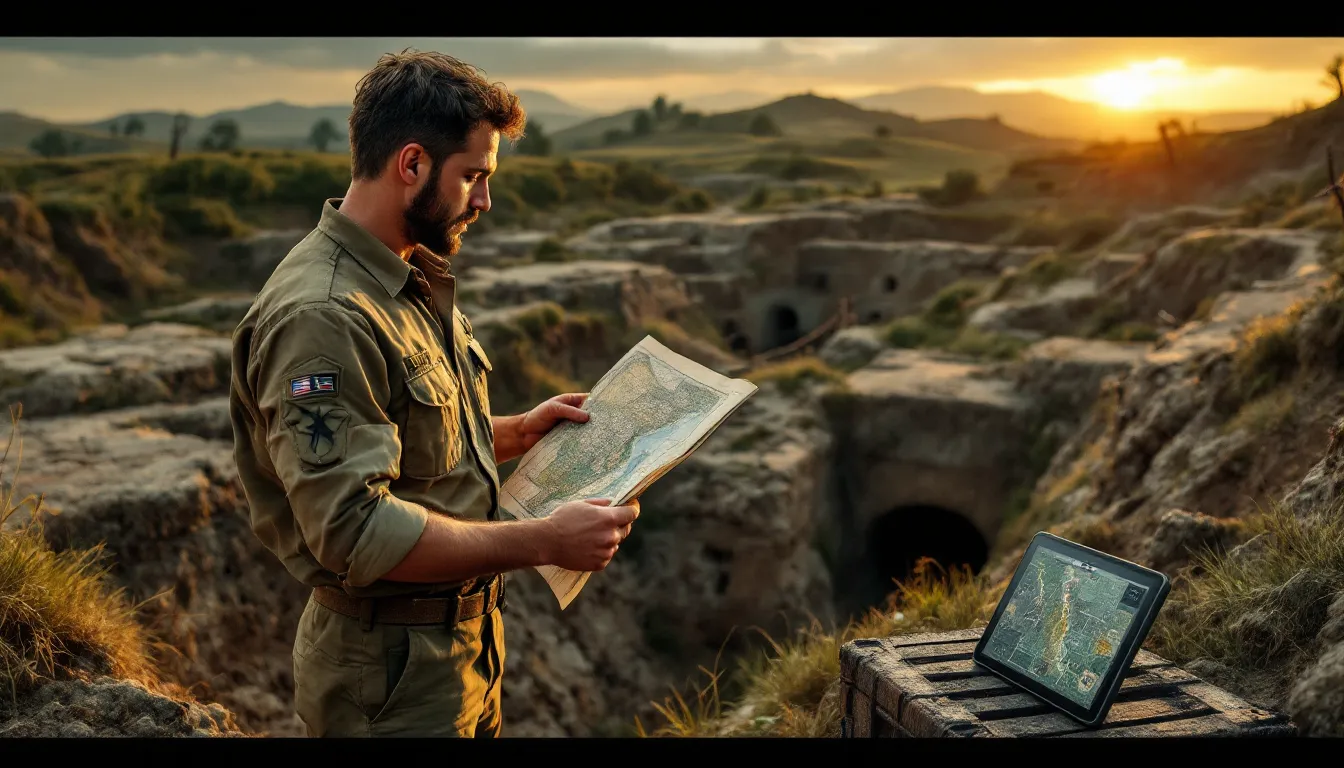
ToggleIf you’ve logged thousands of hours in Battlefield games, navigating virtual maps with precision and studying tactical positions, you might’ve wondered what it’d be like to walk through the actual locations that inspired those digital recreations. Vietnam battlefield tours offer exactly that, a chance to step into history while applying the strategic knowledge you’ve honed in-game. For gamers, especially competitive players and history enthusiasts, these tours represent something unique: a real-world extension of the tactics, geography, and decision-making you’ve been practicing on your screen. In 2026, Vietnam’s historical sites have become more accessible than ever, with tour operators specifically catering to visitors who want to understand the military strategy behind the campaigns. This guide explores what these tours offer, how your gaming background actually prepares you for them, and why connecting your passion for Battlefield games to actual historical preservation matters.
Key Takeaways
- Vietnam battlefield tours offer gamers a unique opportunity to step into historically significant combat locations like Khe Sanh, Cu Chi, and Dien Bien Phu while applying tactical knowledge from Battlefield games to real-world strategy.
- Competitive gaming skills—map awareness, spatial reasoning, and tactical positioning—directly translate to understanding military strategy and enhancing the educational value of battlefield tours.
- Vietnam’s preserved battlefield sites feature authentic terrain, trenches, and tunnel systems that reveal the genuine strategic constraints and advantages that shaped actual military outcomes.
- The best time to visit Vietnam’s battlefield sites is November through February, with costs ranging from $1,500–$3,500 USD for multi-day packages including guides, accommodations, and museum access.
- Your participation in battlefield tourism directly supports the preservation of historically significant sites, contributing to a meaningful ecosystem where gaming culture and historical preservation strengthen each other.
Understanding Vietnam Battlefield Tours and Their Historical Significance
Vietnam battlefield tours aren’t tourist attractions in the conventional sense, they’re immersive historical experiences designed to help visitors understand the complexity of the Vietnam War (1955–1975) through direct engagement with actual combat locations. These tours take you to sites like Khe Sanh, Cu Chi, and Dien Bien Phu, places where strategic decisions shaped not just military outcomes but geopolitical history.
For gamers, understanding the historical context matters because it informs why these maps exist in games like Battlefield Vietnam and similar titles. The terrain, building placement, and defensive positions you encounter in-game reflect real military logic. When you’re holding a choke point in a game, you’re using positioning principles that actual soldiers employed. The difference is stakes, in-game, you respawn: historically, soldiers didn’t.
These tours typically last 3–10 days and include guided walks through preserved trenches, tunnel systems, combat zones, and military installations. Many operators provide historical documentation, survivor testimonies, and museum exhibits that add context to what you’re physically seeing. For competitive gamers, this context transforms a vacation into an educational deep-dive that actually enhances your understanding of tactical gameplay.
The Rise of Immersive Historical Gaming Experiences
The gaming industry has increasingly recognized that historical authenticity drives engagement. Battlefield developers, for instance, conduct extensive research into actual theaters of war, terrain surveys, architectural studies, and historical documentation, to create maps that feel authentic. This trend has created a feedback loop: players who engage with these historically-inspired games become curious about the real locations.
immersive historical gaming experiences have evolved beyond just visual accuracy. Modern Battlefield titles include environmental storytelling, weapon historical accuracy, and even narrative campaigns that explore the human cost of conflict. Games like Squad and Hell Let Loose take this further, emphasizing tactical realism and large-scale team coordination that mirrors actual military operations.
The connection between games and tourism has become so significant that major gaming publishers partner with educational institutions and tourism boards to develop content. Players aren’t just playing historical simulators anymore, they’re increasingly seeking real-world validation of the knowledge they’ve built through games. This has directly contributed to increased tourism at Vietnam’s historical sites, particularly among younger visitors who first learned about the conflict through gaming.
How Video Games Prepare You for Real-World Battlefield Tours
Playing Battlefield games for hundreds of hours does more than pad your kill-death ratio, it genuinely equips you with spatial reasoning skills and tactical awareness that transfer to real-world navigation and historical understanding. When you’re positioning yourself on a virtual map, you’re learning how terrain affects visibility, movement speed, and defensive advantages. These aren’t abstract concepts: they’re the same principles that determined outcomes in actual combat.
Tactical Knowledge from Battlefield Games Applied to Actual Locations
In Battlefield games, understanding sightlines, cover positions, and flanking routes is essential to competitive play. These same skills make you a significantly better tour participant. When you visit Cu Chi Tunnels, for example, knowing how a defender would control narrow passages gives you context for why tunnel systems were designed the way they were. You understand the strategic rationale for entrance placement, ventilation positions, and trap locations, not from imagination, but from having played thousands of rounds on similar structures.
Competitive Battlefield players develop what’s called “map awareness”, the ability to track multiple tactical positions simultaneously and predict enemy movements based on available cover. This translates directly to real-world tours. You’ll notice things other visitors miss: why certain buildings occupy their positions, how defensive lines formed based on geography, and how attackers would approach from different angles. Tour guides frequently note that gaming-background participants ask more sophisticated questions about tactical positioning and strategy.
Take weapon positioning as another example. Knowing effective ranges, reload times, and line-of-sight mechanics from games helps you understand why machine gun nests were placed at specific overlooks or why sniper positions commanded certain approaches. The DPS calculations you perform mentally in-game translate to understanding historical firepower distribution.
Map Familiarity and Navigation Skills
Gamers are exceptionally comfortable with map navigation. You’ve spent countless hours reading minimaps, understanding grid systems, and navigating three-dimensional spaces through limited visual information. This skill proves invaluable on tours where historical maps, terrain contours, and spatial relationships become critical to understanding how battles unfolded.
Many Vietnam battlefield tours provide historical battle maps that show unit positions, movement vectors, and engagement zones. Gamers typically grasp these instantly, you’re already trained to read tactical overlays. When a tour guide points out where a unit held a ridge line, you can visualize how that position would dominate an approach, because you’ve defended similar terrain in games.
This familiarity also means you’ll naturally notice details about terrain that enhance the tour. You’ll recognize chokepoints, understand sight-line dominance, and appreciate why certain terrain features became militarily significant. Where a non-gaming tourist might see a hill, you’ll see a defensible position with clear tactical advantages, because you’ve fought over countless virtual versions of the same concept.
Major Vietnam Battlefield Locations Worth Visiting
Vietnam has preserved several major historical sites that gaming enthusiasts find particularly compelling. These aren’t museum exhibits behind glass, they’re preserved positions where you can stand in trenches, walk through actual defensive structures, and experience the spatial reality that shaped combat.
Khe Sanh Combat Base and Its Gaming Legacy
Khe Sanh Combat Base represents one of the most significant sieges in modern military history. Located in Quang Tri Province near the Demilitarized Zone (DMZ), it was surrounded by North Vietnamese forces for 77 days in 1968. Today, the base remains partially preserved with visible trenches, bunker systems, and artillery positions still evident.
For Battlefield players, Khe Sanh is conceptually familiar. The base operated as a fixed position under siege, similar to holding an objective in a multiplayer map where enemies constantly probe defenses and coordinate assaults from multiple angles. The game-relevant aspect is how defenders allocated resources: artillery support, supply drops, reinforcement timing, and defensive prioritization. The actual base covered approximately 4,000 acres with multiple defensive perimeters, similar in scope and complexity to large-scale Conquest maps.
Visiting Khe Sanh reveals something games can only approximate: the psychological weight of sustained defensive operations. Standing in the actual trenches where soldiers endured 77 days of bombardment provides context that virtual respawning never captures. Tour operators typically spend 4–6 hours at this location, allowing visitors to explore the preserved bunker network, view documentation of supply operations, and understand the strategic reasoning behind maintaining this forward position.
Cu Chi Tunnels: The Underground Strategy
Cu Chi Tunnels are perhaps Vietnam’s most famous preserved military site. Located about 40 kilometers northwest of Ho Chi Minh City, this underground network spans over 200 kilometers when fully extended. Built over decades, the tunnels served as underground bases, supply routes, hospitals, and trap systems during the Vietnam War.
From a gaming perspective, Cu Chi presents fascinating tactical lessons. The tunnel system functioned as a three-dimensional map, something Battlefield games handle well with vertical gameplay. Underground sections provided protection from aerial bombardment and overwatch positions, creating strategic advantages that surprise and flanking mechanics couldn’t achieve on conventional terrain. The tunnels included trap mechanisms, chokepoint design, and multiple exit/entry routes, all concepts Battlefield players recognize from map design philosophy.
Tours of Cu Chi are typically 3–4 hours and include crawling through preserved tunnel sections, seeing trap examples, and visiting a museum documenting tunnel construction and tactics. For gamers, the appeal is understanding how defenders used vertical space and complexity to offset technological disadvantages. Modern Battlefield games with underground areas (like various sewer systems and bunker networks) owe conceptual debt to real complexes like Cu Chi.
The tactical innovation on display, using terrain complexity as a defensive multiplier, directly applies to competitive gaming strategy. Players who understand Cu Chi’s design philosophy often excel at using map verticality and alternative routes in-game.
Dien Bien Phu: Where History and Strategy Intersect
Dien Bien Phu, located in northwestern Vietnam near the Laotian border, was the site of a decisive 1954 battle that effectively ended French colonial presence in Vietnam. The site remains preserved with defensive positions, artillery emplacements, and a museum documenting the 56-day siege.
Dien Bien Phu offers perhaps the most strategically complex battlefield tour because it demonstrates multiple principles simultaneously: defensive positioning, artillery dominance, supply line vulnerability, and tactical adaptation. Defenders established a “hedgehog” defensive position, multiple fortified zones supporting each other. Attackers systematically concentrated superior numbers and firepower to collapse the position.
Gamers recognize this as a classic asymmetric warfare scenario. The defending force had superior defensive position but faced numerical disadvantage and supply constraints (similar to holding objectives against overwhelming odds in-game). Understanding how defenders organized their perimeter, which positions controlled which approaches, how artillery intersected fields of fire, and where weaknesses inevitably formed, teaches tactical principles that directly transfer to competitive gameplay. Tour guides report that gaming-background visitors grasp the strategic calculus faster and ask more precise questions about unit coordination and resource allocation.
Planning Your Vietnam Battlefield Tour: Essential Guide for 2026
Visiting Vietnam’s battlefield sites requires practical planning. Unlike casual tourism, these visits involve navigating sometimes-remote areas, enduring heat and humidity, and preparing mentally for emotionally significant locations.
Best Time to Visit and Tour Logistics
Vietnam’s climate impacts tour scheduling significantly. November through February offers the most comfortable conditions, with cooler temperatures (60–75°F) and lower humidity. This is also peak tourism season, so book tours 6–8 weeks in advance.
From a logistics perspective, most battlefield tours start from either Hanoi (for northern sites like Dien Bien Phu) or Ho Chi Minh City (for southern locations like Cu Chi Tunnels and Khe Sanh). International flights arrive at either Noi Bai International Airport (Hanoi) or Tan Son Nhat International Airport (Ho Chi Minh City).
Tour operators specializing in battlefield tourism typically offer packages ranging from 3–10 days. Reputable operators include military history specialists who provide actual historians or retired military personnel as guides, a critical factor for depth and accuracy. Tours generally include ground transportation, accommodations, meals, and museum access. Budget $1,500–$3,500 USD for multi-day packages depending on accommodation quality and included activities.
Visa requirements depend on nationality. US, UK, and Canadian citizens can obtain e-visas online (processing time 3–5 days) or arrange visas through embassies. Check Vietnam’s official tourism guidelines for current requirements, as visa policies shift periodically.
What to Bring and How to Prepare
Physical preparation matters more than casual tourism. Battlefield tours involve walking uneven terrain, climbing trenches, and sometimes crawling through confined spaces (particularly Cu Chi Tunnels). Appropriate footwear is essential, waterproof hiking boots with ankle support, not sneakers. The terrain changes from muddy (during rainy season residue) to hard-packed dirt with uneven surfaces.
Clothing should accommodate tropical heat while protecting against sun exposure. Lightweight, breathable fabrics work best, but bring long sleeves and pants for mosquito protection. Mosquitoes carry dengue fever and other pathogens, insect repellent with DEET is non-negotiable. Bring a hat with good brim coverage and high-SPF sunscreen.
Medical preparation includes travel vaccinations (Hepatitis A, Typhoid, Japanese Encephalitis recommended) and travel insurance. Bring prescription medications in original containers with documentation. Gastrointestinal issues affect many first-time travelers, bring anti-diarrheal medication and electrolyte packets.
For the actual tour experience, bring a good camera (smartphone cameras work fine), a backpack with water capacity (3+ liters), and snacks (nuts, protein bars) for between-meal energy. Binoculars enhance the experience by revealing distant terrain features that shaped tactical positions. A small notebook helps capture details from guide explanations, your gaming background will make you want to document tactical elements.
Mentally prepare for emotional weight. These sites represent genuine tragedy, thousands died at each location. Respectful behavior is essential. Tours visit memorials and cemeteries where visitors experienced loss. Approach with appropriate solemnity, and don’t treat locations as photo opportunities for social media content.
The Educational Value of Battlefield Tourism
Beyond the surface appeal of visiting famous locations, battlefield tours provide genuine historical and strategic education that contextualizes both gaming and geopolitical understanding.
Learning Military Strategy and Tactics
Battlefield tourism teaches strategy through environmental context. You can study how defensive positions utilized terrain, something no textbook fully conveys until you’re standing in actual trenches observing sight-lines to approaching routes. This is why military academies encourage historical site visits: seeing the actual terrain where decisions played out reveals logic that abstract descriptions miss.
Competitive gamers learn that battlefield positioning isn’t arbitrary. Defensive positions occupied specific locations because they controlled key approaches, provided overlapping fields of fire, or maximized defensive depth. Understanding this at historical sites makes you a better Battlefield player because you recognize that good map positions aren’t accidental, they reflect genuine strategic principles. When you defend a position in-game, you’re applying concepts proven effective across actual centuries of warfare.
Tour guides experienced with gamer audiences note that they excel at identifying tactical flaws or innovations. For instance, understanding why Khe Sanh’s defenders positioned artillery at specific locations (to provide overlapping support for multiple perimeters) directly transfers to understanding spawn point positioning and team positioning in multiplayer modes. The principles scale, but the underlying logic remains constant.
Guided tours typically include discussions of command decisions, resource allocation, and adaptive strategy. You learn how defenders adjusted tactics when initial plans failed, how they managed limited resources, and how they predicted opponent moves. These aren’t abstract lessons, they’re case studies in real-time decision-making under pressure, exactly the skillset competitive gaming demands.
Understanding Historical Context Through Immersion
Reading about the Vietnam War in a textbook conveys information. Standing in the actual position where soldiers fought against overwhelming odds conveys understanding. This distinction matters significantly for retaining complex historical knowledge.
Tours provide immersion through multiple sensory inputs. You see the terrain that constrained options. You hear accounts from actual combatants or their documented testimonies. You visit museums displaying equipment, documents, and personal effects. Your brain processes this information differently than reading about it, memory consolidation improves dramatically with multi-sensory engagement.
For gamers specifically, this context eliminates the abstraction that sometimes plagues historical fiction. When you play Battlefield Vietnam, the maps represent interpretations of actual locations. Visiting those locations in person removes interpretation, you see exactly what constraints and opportunities existed, which makes subsequent gameplay feel significantly more grounded and meaningful.
Many tour operators in 2026 now incorporate archival photography, showing actual combat photos taken at locations you’re standing in. Seeing a photograph of soldiers in a trench, then standing in that same trench, creates powerful historical connection. This type of experiential learning produces deeper understanding than conventional tourism or gaming can independently achieve.
Connecting Gaming Passion to Historical Preservation
Vietnam’s battlefield sites exist because Vietnamese historical organizations and the government prioritized preservation. Visiting these sites directly supports preservation efforts, tour revenue funds maintenance, restoration, and educational programs.
For gamers, recognizing this connection transforms tourism into meaningful participation in historical preservation. Every dollar spent on a battlefield tour contributes to maintaining the physical locations that inspire game design and historical understanding. Vietnam’s preservation efforts have been remarkably effective, many sites remain largely as they were decades ago, which is precisely why gaming companies source authentic designs from these locations.
Gamers now represent a significant visitor demographic to Vietnam’s historical sites. Tour operators report that gaming enthusiasts often become passionate advocates for preservation after visiting. They understand that these locations matter, not just historically, but culturally and educationally. The gaming industry’s engagement with military history has actually strengthened public interest in historical preservation, creating a positive feedback loop.
Industry publications have covered this phenomenon extensively. Recent gaming industry coverage has documented how historical tourism and game design inform each other, with developers increasingly crediting site visits and historical research in their design documentation. This recognition elevates tourism from casual sightseeing to participating in a larger ecosystem that values historical accuracy and cultural memory.
For competitive gamers specifically, supporting preservation of historically significant sites reinforces the principle that knowledge matters. You’ve built competitive advantage through map knowledge and tactical understanding, that same principle applies historically. Preserving these sites maintains the actual knowledge sources that games draw from, ensuring future generations can access the same educational opportunities.
Consider that when you visit a preserved battlefield, you’re not just learning history, you’re participating in cultural memory preservation. Veterans’ organizations, local communities, and educational institutions depend on tourism revenue to maintain these sites. Your participation directly funds that work. Major gaming organizations have begun partnering with preservation groups, recognizing that their audience cares about authenticity and historical significance. This represents a meaningful convergence of gaming culture and historical preservation.
Conclusion
Vietnam battlefield tours represent something unique for the gaming community: an opportunity to apply competitive knowledge in real-world context while contributing to historical preservation. Your thousands of hours studying maps, understanding terrain advantages, and perfecting tactical positioning translate directly to meaningful engagement with actual military history.
These tours aren’t about romanticizing conflict, they’re about understanding how strategy, geography, and human decision-making shaped outcomes that affected millions. For gamers, this context deepens appreciation for how game designers source authenticity and why accurate map design matters. Standing in actual trenches where soldiers fought transforms abstract historical knowledge into embodied understanding.
Planning a Vietnam battlefield tour in 2026 is straightforward. Visit during optimal weather (November–February), budget appropriately for guides and accommodations, and prepare physically for uneven terrain. Bring proper gear, travel insurance, and an appropriate attitude toward emotionally significant locations.
Beyond personal experience, your tourism directly supports preservation of these historically critical sites. Gaming industry engagement with military history has amplified interest in authentic historical preservation, your participation strengthens that ecosystem. When you explore Cu Chi Tunnels or stand in Khe Sanh’s preserved trenches, you’re not just collecting experiences: you’re contributing to cultural memory preservation and supporting communities that maintain these vital historical resources.
For gamers seeking to deepen their understanding of the strategic principles that inform Battlefield gameplay, visiting actual battle sites offers irreplaceable education. History and gaming intersect at these locations, creating learning opportunities that neither discipline provides independently. If you’ve invested time mastering these games, investing time understanding their historical foundations represents a natural, and deeply rewarding, progression.


