
Table of Contents
ToggleKennesaw Mountain National Battlefield Park sits just northwest of Atlanta, Georgia, preserving one of the Civil War’s most pivotal moments. While many know it as a historical landmark, the park offers far more than dusty artifacts and faded timelines. It’s a sprawling outdoor destination where hiking trails wind through actual battle terrain, scenic overlooks reveal how generals positioned their forces, and interactive exhibits bring 1864 tactics to life. Whether you’re a history enthusiast retracing Sherman’s march, a photographer seeking dramatic Georgia landscapes, or an outdoor adventurer looking for accessible trails near the city, Kennesaw Mountain delivers. This guide covers everything you need to plan a meaningful visit: from understanding the battle’s strategic significance to navigating trails, facilities, and nearby accommodations.
Key Takeaways
- Kennesaw Mountain National Battlefield Park preserves the June 27, 1864 battle where Union General Sherman’s direct assault against Confederate fortifications resulted in approximately 3,000 Union casualties versus 800 Confederate casualties, making it a pivotal moment in Civil War tactics.
- The park offers free year-round access with over 16 miles of well-maintained hiking trails ranging from easy 20-minute walks to challenging all-day hikes, making it an exceptional destination for history enthusiasts, outdoor adventurers, and photographers near Atlanta.
- Interactive exhibits, ranger-led programs, and preserved entrenchments allow visitors to understand the strategic importance of Kennesaw Mountain within Sherman’s broader Atlanta Campaign and the evolution of Civil War battlefield tactics.
- October and November provide optimal visiting conditions with comfortable temperatures, good trail conditions, and fewer crowds than summer peak season.
- The park provides accessible facilities including wheelchair-friendly trails, free parking, maintained restrooms, and proximity to nearby attractions and accommodations in Marietta and Kennesaw, making it suitable for visitors of varying mobility levels and interests.
What Is Kennesaw Mountain National Battlefield Park?
Kennesaw Mountain National Battlefield Park is a 2,965-acre National Park Service site that preserves the ground where Union and Confederate forces clashed on June 27, 1864. Located in Cobb County, about 20 miles northwest of downtown Atlanta, the park sits at the heart of the Atlanta Campaign, one of the Civil War’s most decisive military operations.
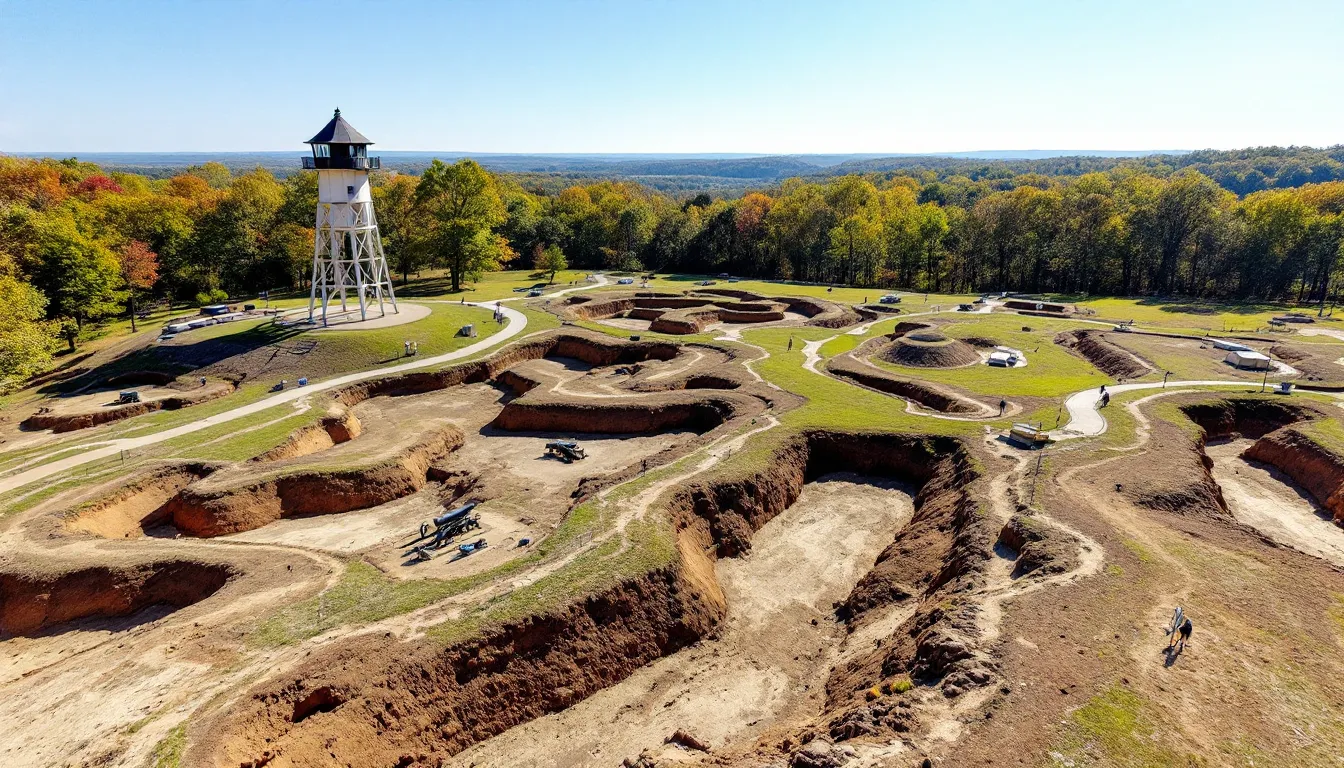
The park isn’t just a monument: it’s an immersive historical landscape. You can walk the actual entrenchments where Confederate soldiers dug in, stand on ridges where cannon fire echoed across the valley, and see how terrain influenced every tactical decision. The park’s main features include preserved earthworks, two visitor centers, over 16 miles of hiking trails, and detailed interpretive markers explaining unit movements and casualty counts.
Unlike many Civil War sites that focus narrowly on a single aspect, Kennesaw Mountain captures the complexity of the conflict. The park preserves perspectives from both sides, explains the human cost of the battle (over 2,600 casualties in a single day), and contextualizes this fight within the broader Northern advance toward Atlanta. It’s accessible year-round and scaled for visitors ranging from casual day-trippers to serious history researchers.
Historical Significance And The Civil War Connection
The Battle Of Kennesaw Mountain In 1864
On June 27, 1864, Union General William Tecumseh Sherman ordered a direct assault on Confederate entrenchments atop Kennesaw Mountain, one of his rare tactical mistakes. After weeks of maneuvering around Confederate General Joseph Johnston’s defenses, Sherman grew impatient. He believed a direct frontal attack would dislodge the Confederates quickly.
It didn’t work. Confederate forces under Johnston had spent days fortifying positions across a 10-mile line anchored on Kennesaw Mountain. When Sherman’s troops advanced across open ground, Confederate artillery and rifle fire cut them down. The Union suffered approximately 3,000 casualties compared to roughly 800 for the Confederates, an embarrassing defeat that cost Sherman nearly 10% of his combat strength.
What makes the battle historically significant isn’t just the casualty ratio: it’s what it revealed about Civil War tactics by 1864. Frontal assaults against prepared defenses were no longer viable, yet commanders on both sides kept trying. Kennesaw Mountain exemplified the grinding, attritional warfare that defined the conflict’s final year.
Strategic Importance During Sherman’s Campaign
The Battle of Kennesaw Mountain occurred within the larger Atlanta Campaign (May-September 1864), Sherman’s grand strategy to capture Atlanta and destroy Confederate supply lines. This campaign would eventually shift the political landscape back north, the fall of Atlanta boosted Lincoln’s reelection prospects and demonstrated Union military capability.
Sherman’s overall approach was to maneuver around Confederate positions, threaten supply lines, and force Johnston to either fight on unfavorable terrain or retreat. For weeks, this strategy worked. But at Kennesaw Mountain, Sherman departed from this successful playbook, possibly due to political pressure from Washington to show aggressive action.
The Confederacy’s strategic position was untenable. Johnston’s army couldn’t hold Atlanta indefinitely: supply lines were vulnerable, and Union forces outnumbered him roughly 3-to-1. By mid-July, Johnston was replaced by John Bell Hood, a more aggressive commander. Hood’s subsequent defeats sealed Atlanta’s fate. Kennesaw Mountain, then, stands as a pivot point: the moment when maneuver-based warfare gave way to the attritional grinding that broke the Confederacy.
Visitor Facilities And Amenities
Entrances, Hours, And Admission Information
Kennesaw Mountain National Battlefield Park operates year-round with no entrance fee, the park is completely free to access. This makes it an exceptional value for families and budget-conscious visitors.
The park’s main entrance is on Old Mountain Road (GA-120), and it’s open daily from 8:30 AM to 5:00 PM (hours may vary seasonally, so check the NPS website before visiting). The Visitor Center, located near the main entrance, houses exhibits, a bookstore, and information desks. It’s open the same hours as the park.
There’s also a secondary entrance to the Cheatham Hill section of the park, which provides access to some of the most dramatic battlefield terrain and is useful if you’re coming from the south.
Restrooms, Parking, And Accessibility Features
The park provides free parking at multiple lots near the Visitor Center and trailheads. Spaces are well-marked and plentiful even during peak season weekends.
Restroom facilities are available at the Visitor Center and at picnic areas throughout the park. These are maintained regularly and include accessible facilities for visitors with mobility challenges. The park’s infrastructure was expanded in recent years to improve accessibility.
Several trails offer wheelchair access or easy walking conditions. The paved loop near the Visitor Center is fully accessible and provides views of preserved entrenchments without requiring significant elevation gain. The park’s terrain is hilly overall, but trail difficulty is clearly marked, rangers can advise on the best options for your mobility level. Picnic tables, shaded areas, and benches are distributed throughout, making the park comfortable for extended visits even in summer heat.
Hiking Trails And Outdoor Activities
Popular Trails For All Skill Levels
Kennesaw Mountain offers over 16 miles of trails ranging from gentle 20-minute walks to challenging all-day hikes. Most trails are well-marked and maintained by the National Park Service.
Kennesaw Mountain Trail (2.8 miles round-trip, moderate difficulty) is the park’s signature hike. It ascends the mountain’s western face, gaining about 400 feet of elevation. Near the summit, you pass through reconstructed Confederate entrenchments and reach an observation tower offering 360-degree views of the battlefield. On clear days, Atlanta’s skyline is visible to the south.
Cheatham Hill Trail (2 miles round-trip, moderate) focuses on the section where the heaviest fighting occurred on June 27. Interpretive signs explain unit positions and casualty counts. This trail includes several steep pitches but rewards hikers with views of preserved earthworks and artillery positions.
Illinois Monument Trail (0.5 miles, easy) is a short walk to a tall monument marking where the 57th Illinois Infantry fought. It’s perfect for those with limited time or mobility constraints.
Mountain View Trail (1.4 miles, easy to moderate) is less crowded than the main peak and offers good views for photographers.
Seasonal conditions affect trail difficulty. In summer, afternoon heat and humidity make early morning hikes preferable. After rain, some trails become muddy and slippery: the park recommends avoiding certain sections during heavy rainfall.
Scenic Viewpoints And Photography Opportunities
The summit observation tower is the prime spot for broad battlefield photography, especially at sunrise when light rakes across preserved earthworks. The vantage point reveals how terrain shaped tactical decisions, you can literally see why Confederates chose this high ground.
Cheatham Hill’s artillery positions offer intimate photography of preserved cannons against forested backdrops. The trenches, though overgrown, create compelling lines and contrast.
For landscape photographers, the park’s transitional terrain between piedmont and mountain foothills creates varied lighting conditions. Spring wildflowers line trails, while fall foliage creates dramatic color shifts. The preserved earthworks photograph beautifully regardless of season, the human-shaped landscape contrasts sharply with the surrounding forest.
Visitors often miss quieter vistas along the perimeter trails. The western edge of the park, accessed via secondary trailheads, sees fewer crowds and offers more serene photography without the chaotic background of popular viewpoints.
Museum Exhibits And Educational Programs
Interpretive Centers And Artifact Collections
The main Visitor Center features rotating exhibits on the Atlanta Campaign, Civil War-era medicine, weaponry, and soldier life. Artifacts include muskets, uniform fragments, personal effects, and correspondence from soldiers on both sides. The exhibits are organized chronologically, walking visitors through the campaign’s progression from May through September 1864.
A key feature is the electric battlefield map, an interactive display showing unit movements during the battle. Lights indicate where different regiments were positioned, how they moved, and where casualties occurred. It’s a simple but effective tool for understanding the day’s complex maneuvers.
The park’s artifact collection is smaller than some major Civil War museums but is well-curated and specific to Kennesaw Mountain and the Atlanta Campaign. Most pieces are local finds or donations from families of soldiers who fought here.
Ranger-Led Tours And Events
The park offers free ranger-led programs throughout the year. These typically include 45-minute guided walks focusing on specific aspects: artillery tactics, the infantry assault, hospital operations, or individual unit stories. Rangers are knowledgeable and adjust content based on audience interest.
Special programs occur during key anniversaries (June 27 is the battle’s annual observance) and seasonal celebrations. Winter programs focus on the hardships of 1864 fighting. Spring programs emphasize the campaign’s strategic context. Visitor Center staff can recommend the best programs for your interests.
Self-guided tour maps are available at the entrance and online. These provide mile-by-mile narration of key sites and are excellent for visitors preferring independent exploration. The maps include historical photos showing how specific locations looked in 1864, allowing you to compare past and present landscapes.
Planning Your Visit: Best Times And Tips
Seasonal Considerations And Weather
spring (March-May) offers mild temperatures, lower humidity, and blooming vegetation, ideal for hiking. Crowds are moderate. Afternoon thunderstorms can develop quickly in April and May, so plan hikes for morning hours and check forecasts.
Summer (June-August) brings heat and humidity that makes midday hiking uncomfortable. Early morning starts are essential. The park is more crowded on weekends, though weekday visits remain manageable. June 27 hosts an annual commemoration event drawing larger crowds than normal.
Fall (September-November) is excellent for hiking and photography. Temperatures are comfortable, humidity drops, and foliage colors create visual interest. This is peak visitation season, so expect crowds on weekends. Trails are generally dry, though occasional rain can occur.
Winter (December-February) brings the fewest crowds and cool (but rarely freezing) temperatures. Days are shorter, limiting available daylight for hiking. Some interpretive programs shift indoors during winter months.
Best time to visit: October and November offer optimal conditions, comfortable temperatures, good trail conditions, and manageable crowds compared to summer peak season.
What To Bring And Safety Precautions
Wear sturdy hiking boots with good ankle support, especially on Kennesaw Mountain Trail where exposed roots and rocks are common. Bring at least 2 liters of water per person: the park has no water stations on trails. Hydration is critical, as summer afternoon temperatures exceed 85°F with high humidity.
Sunscreen, insect repellent, and a hat are essential. Ticks are present year-round and can carry Lyme disease: check yourself thoroughly after hiking and consider treating clothing with permethrin beforehand.
The terrain is uneven with significant elevation changes. Hikers with knee or joint issues should choose gentler trails like Mountain View or Illinois Monument. Check the trail difficulty ratings before starting.
Cellular service is spotty throughout the park: inform someone of your hiking plans and expected return time. Trails are well-marked, but bringing a paper map or downloading offline maps is smart. Weather can change rapidly, afternoon thunderstorms in summer can be intense. Avoid exposed ridgelines and open areas during electrical storms.
The park prohibits firearms, alcohol, and pets on trails (though service animals are allowed). These rules keep all visitors safe and preserve the historical site.
Nearby Attractions And Accommodations
Kennesaw Mountain sits within easy driving distance of numerous Atlanta attractions. The Kennesaw battlefield itself is a destination, but combining it with nearby sites makes for a fuller trip.
Nearby attractions include Fort McAllister State Historic Site (south of Atlanta, 30 minutes away), an earthwork fort with museum exhibits focusing on coastal Civil War operations. The Chattahoochee River National Recreation Area offers kayaking and fishing along a scenic river corridor. Mountain laurel blooms in spring make it visually spectacular.
Inside the park itself, the Kolb Farm site is preserved as a standalone historic building where fighting occurred on June 22, 1864. It’s a short walk from the main park area.
Accommodations are readily available in nearby Marietta (5 miles south) and Kennesaw (3 miles south). Chain hotels like Holiday Inn, Comfort Inn, and Best Western offer budget-friendly options. Airbnb properties range from shared rooms to full cottages. For history enthusiasts, the Marietta Historic District features bed-and-breakfast properties in restored antebellum homes.
Camping is limited nearby, the park itself has no campground, but Stone Mountain Park (30 minutes away) offers extensive camping facilities. Private campgrounds in Paulding and Cobb counties provide RV hookups and tent sites.
Dining centers around Marietta’s downtown square, which has restaurants spanning casual to upscale. Local chain Taco Mac offers craft beer and casual food. For Civil War-themed dining, some restaurants feature period-inspired menus or historical ambiance.
For serious history buffs, the Atlanta History Center (20 minutes south) houses extensive Civil War collections and the Swan House, a Greek Revival mansion. The Library of Congress Civil War collections include digitized documents and photographs from the Atlanta Campaign available online for research before or after your visit.
Planning a full day or multi-day trip allows you to combine Kennesaw Mountain with broader Atlanta history tourism, making your time in the region more comprehensive.
Conclusion
Kennesaw Mountain National Battlefield Park delivers authentic historical experience without corporate overlay or excessive commercialization. It’s a place where terrain dictates understanding, walking Kennesaw Mountain Trail, you grasp why the Confederate position was strong. Hiking Cheatham Hill, you understand why Sherman’s frontal assault failed.
For history enthusiasts, the park offers primary sources, expert interpretation, and physical connection to the past. For casual visitors, it’s an accessible outdoor destination with scenic trails and picnic areas. Photographers find compelling visual opportunities throughout the year.
Planning matters, visit in spring or fall for optimal conditions, arrive early to avoid crowds and heat, bring water and proper footwear, and allocate at least half a day for meaningful exploration. The free admission and year-round operation make repeat visits practical.
Eventually, Kennesaw Mountain’s value lies in preserving a pivotal moment while remaining accessible. It’s a park that respects both history and visitors, offering depth for those seeking it without alienating casual explorers.


